
Every carp carries its age written on its scales.
Every carp carries its age written on its scales. Fisheries scientists have been reading them for over a century, using the same idea as counting tree rings.
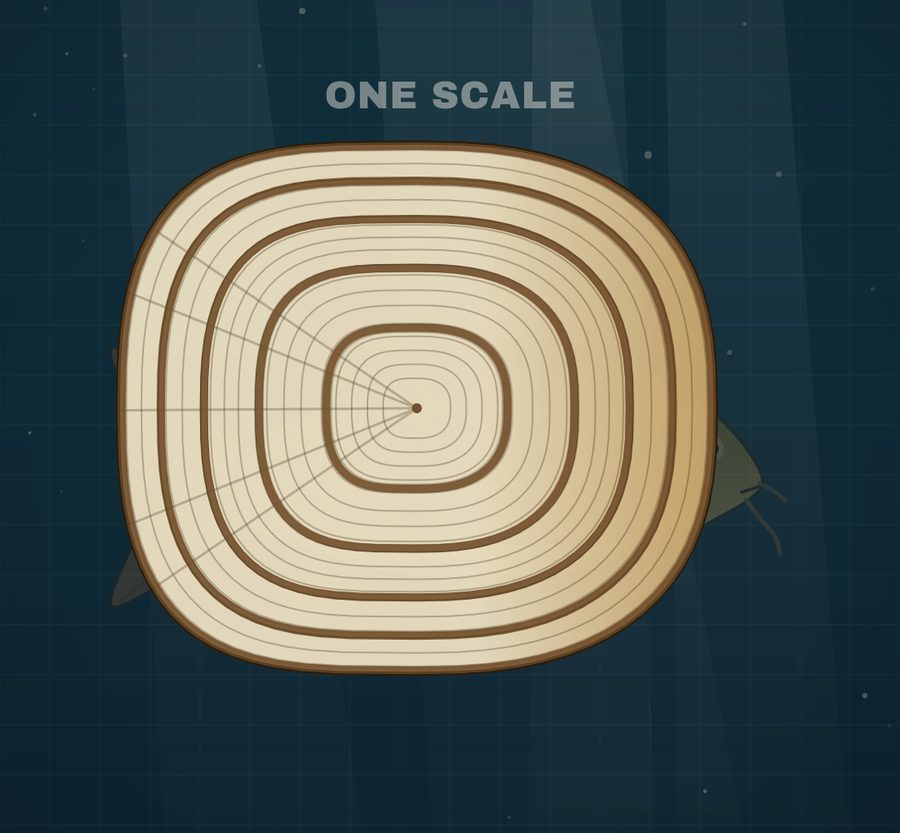
A scale grows with the fish
A scale doesn't get replaced as a fish grows. It grows outward from its centre (the focus), laying down fine ridges called circuli as it goes, like the rings of a tree.
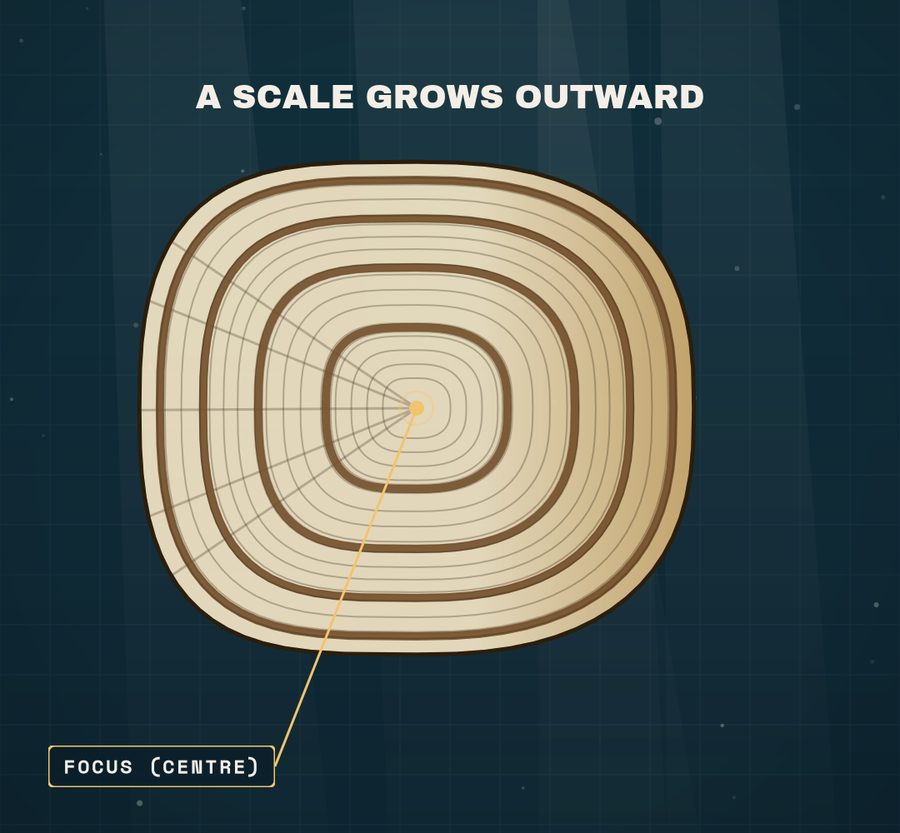
Winter writes a line
In summer, a carp grows fast and the circuli are laid down widely spaced. In winter, growth slows right down (FILE 004) and the circuli bunch tightly together. Under a microscope that tight bunch shows up as a distinct band, called an annulus. One annulus means one winter, so one year.
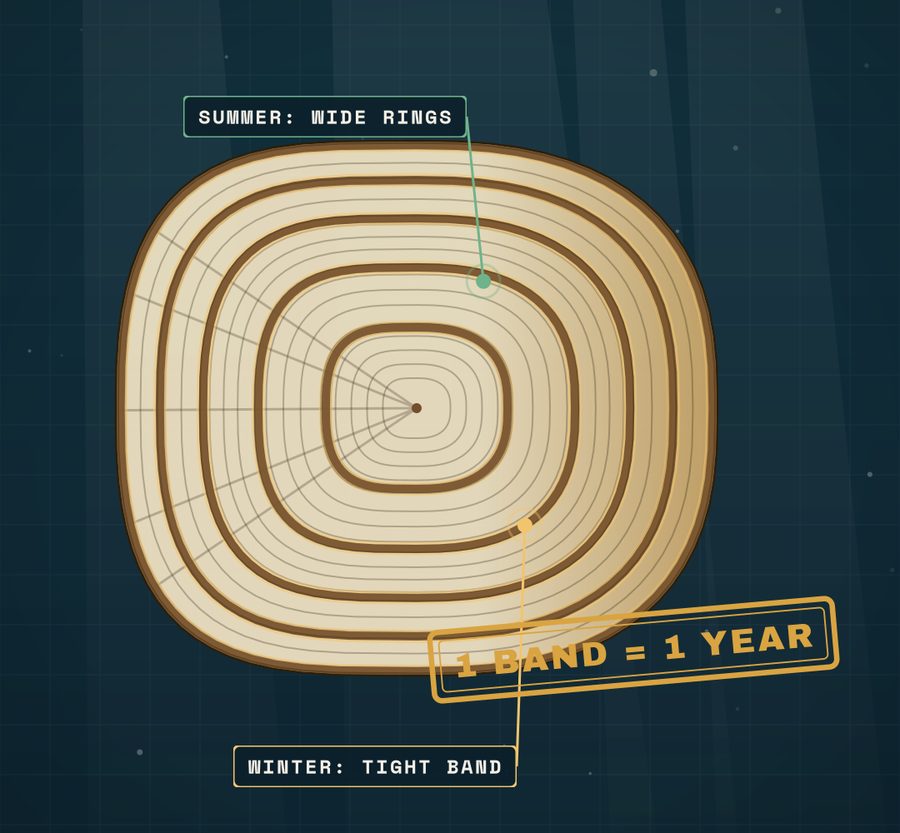
Count the bands
Count the annuli from the centre outwards and you have the fish's age. The scale in the animation shows five.
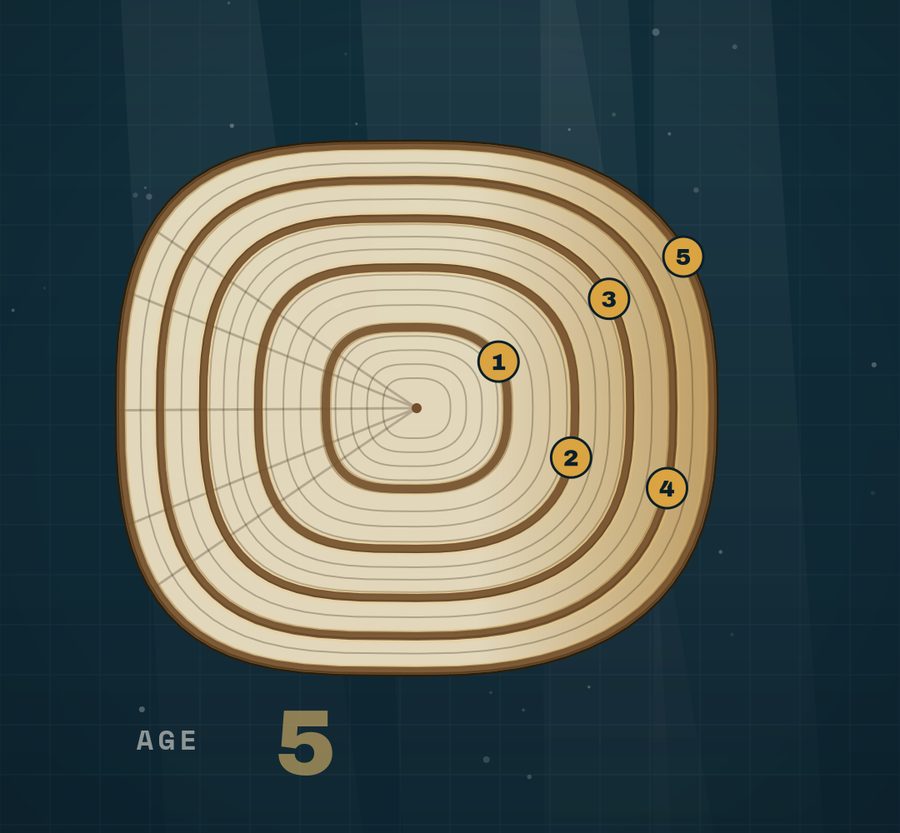
Old fish are harder to read
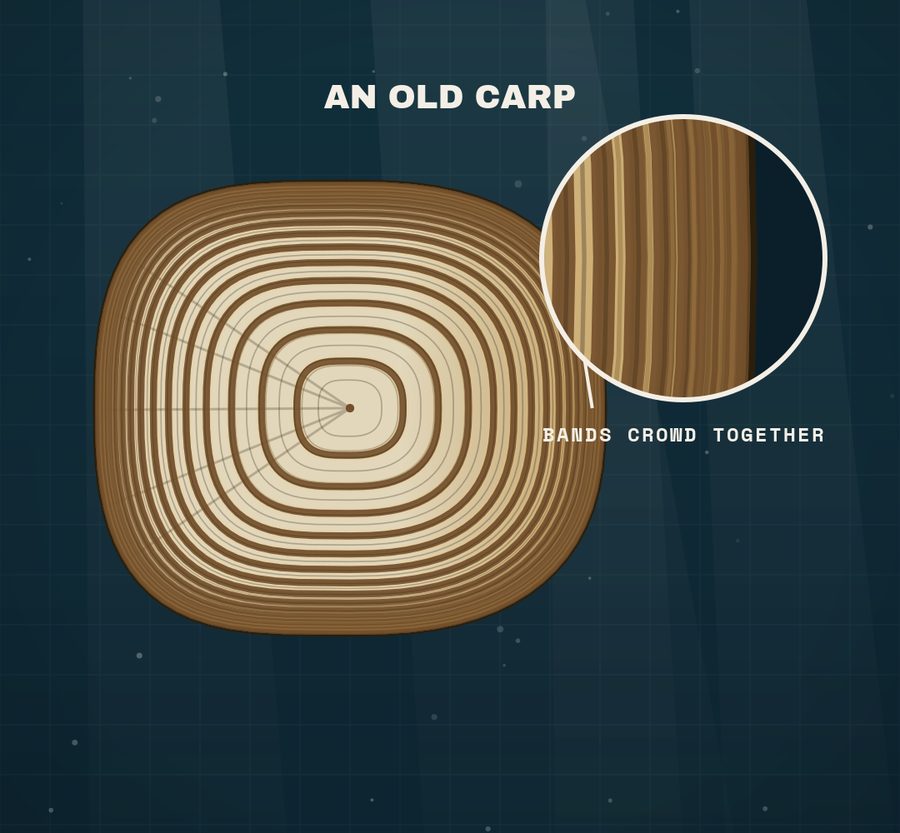
As a carp gets older, it grows more slowly, so the outer bands get crowded together at the edge and become hard to tell apart. Scale ages become less reliable in old fish, so scientists double-check with otoliths, tiny "ear stones" in the inner ear that also lay down yearly layers.
The 226-year-old koi?
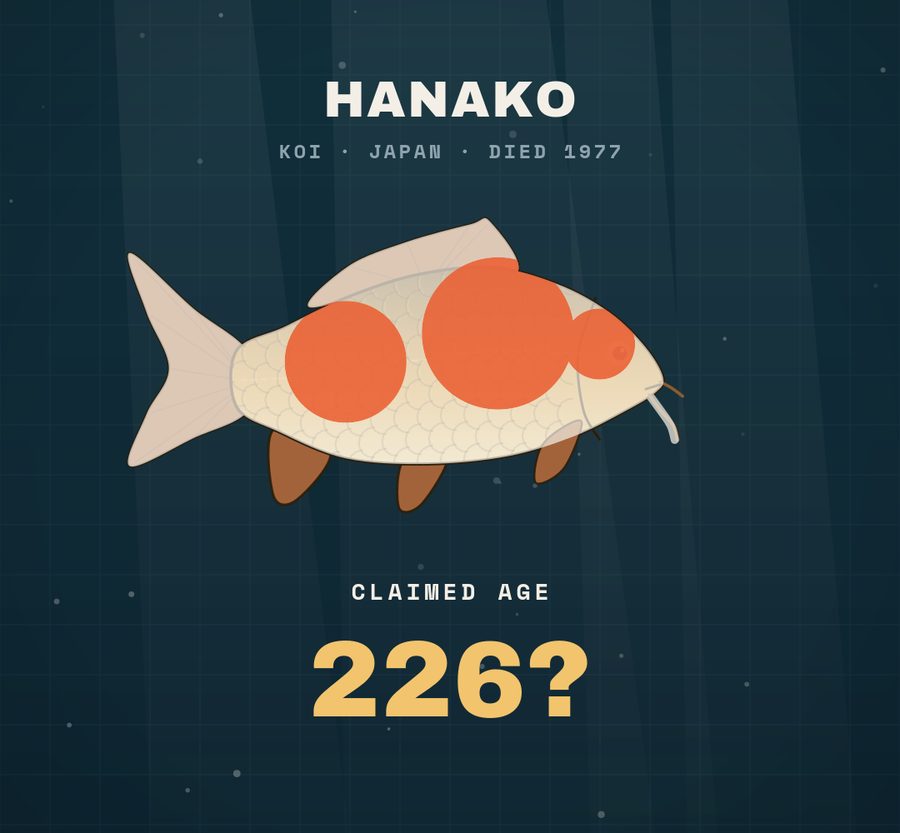
Hanako, a koi in Japan, was famously claimed to be 226 years old when she died in 1977, based on a 1966 reading of her scales. It's a wonderful story, but the age was never verified and scientists are sceptical. Scale reading of very old fish is exactly where the method is weakest.
How we know: the sources
Every claim in the video, where it comes from, and how sure we are.
-
Scales grow with the fish, adding concentric ridges (circuli) around a central focus
SOURCE Standard fisheries science, e.g. Bagenal & Tesch (1978), Age and growth, in Methods for Assessment of Fish Production in Fresh Waters (IBP Handbook 3)
CONFIDENCE High
-
Slower winter growth crowds the circuli into an annual mark (annulus), so one annulus ≈ one year
SOURCE Same source; the standard method for temperate fish
CONFIDENCE High. The "dark band" is how it looks under magnification and is simplified here.
-
"Like tree rings"
SOURCE A standard teaching analogy
CONFIDENCE Fair
-
Scale ages get less reliable in old fish because the outer annuli crowd together; otoliths are used to check
SOURCE Vilizzi & Walker (1999), Age and growth of the common carp in the River Murray, Environmental Biology of Fishes 54; general age-validation literature
CONFIDENCE Medium-high. Carp otolith work commonly uses the lapilli ("ear stones").
-
Hanako, a koi in Japan, was claimed to be 226 years old (at death in 1977), from a scale reading by Dr Komei Koshihara in 1966
SOURCE Widely reported (e.g. in a 1966 Japanese radio broadcast, and since in many outlets)
CONFIDENCE High that it was claimed. The age itself is unverified, and scientists treat it as doubtful. We say "claimed" and "sceptical".
-
Pronoun for Hanako
SOURCE Reported as female in coverage
CONFIDENCE Fine