What Is a Carp's Lateral Line?
Carp have a sense we simply don't have. It runs along their side in a line you've probably looked at a hundred times without realising it's a sense organ: the lateral line.
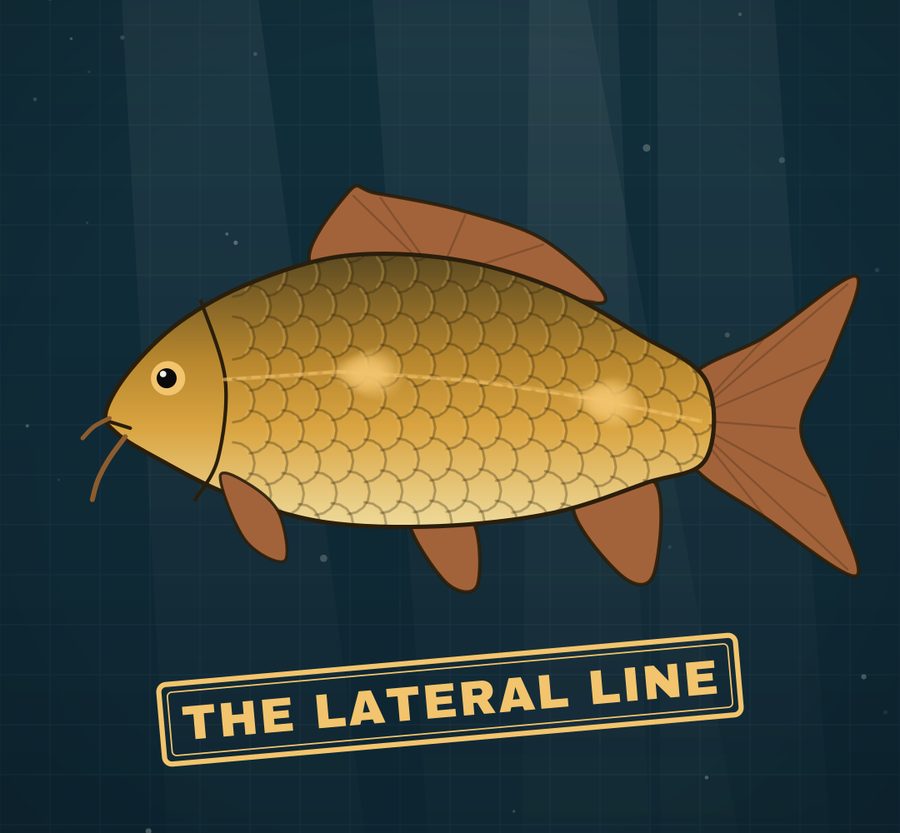
A line of tiny holes
Look closely along a carp's flank and you'll see a row of scales running from head to tail, each with a tiny pore in it. There are more of these canals around the head too.
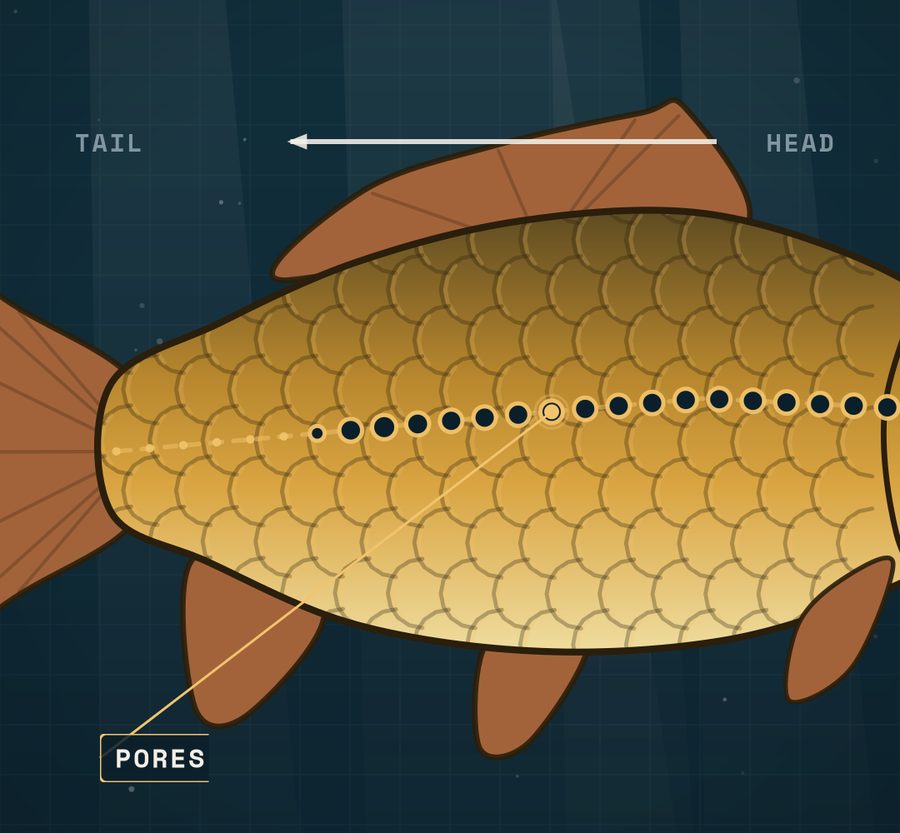
What's under the skin
Each pore opens into a canal running under the skin, filled with fluid. Along the canal sit clusters of sensory cells called neuromasts. Each one is a group of hair cells with their tiny hairs embedded in a soft, jelly-like cap called a cupula. They're the same kind of cell as the hair cells in your inner ear that let you hear.
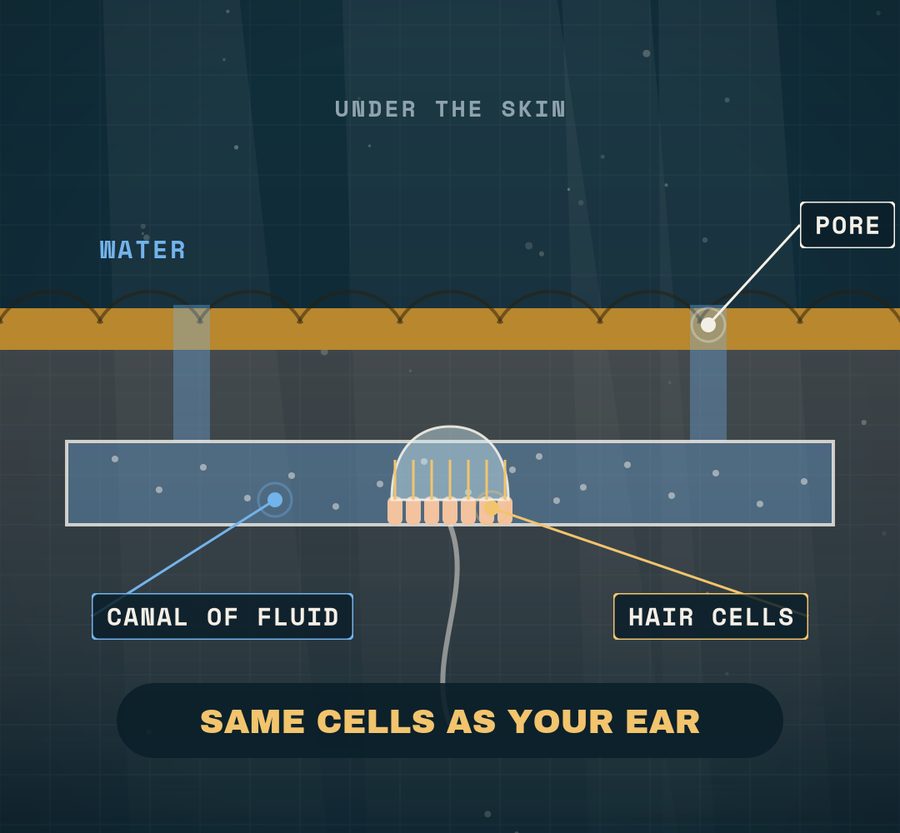
How it works
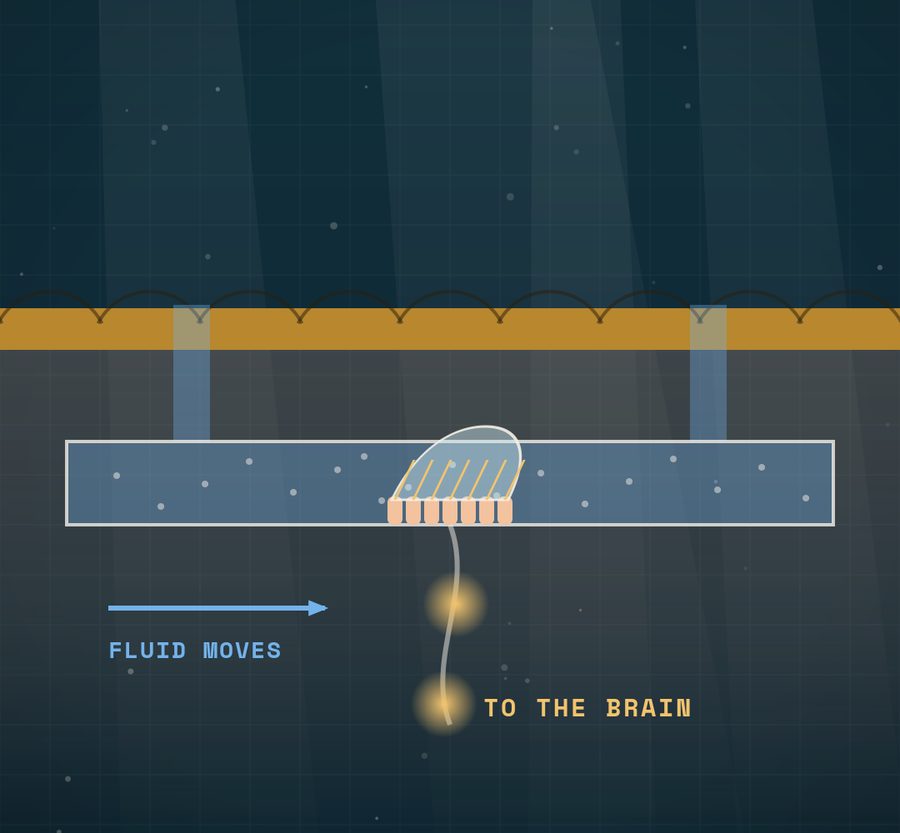
When the water next to the fish moves, it pushes on the fluid in the canals. The fluid moves, the cupula bends, the hairs bend with it, and the hair cells fire signals to the brain. The carp feels the movement of the water around it. In the 1960s, the biologist Sven Dijkgraaf called it "touch at a distance".
Close-range, but powerful
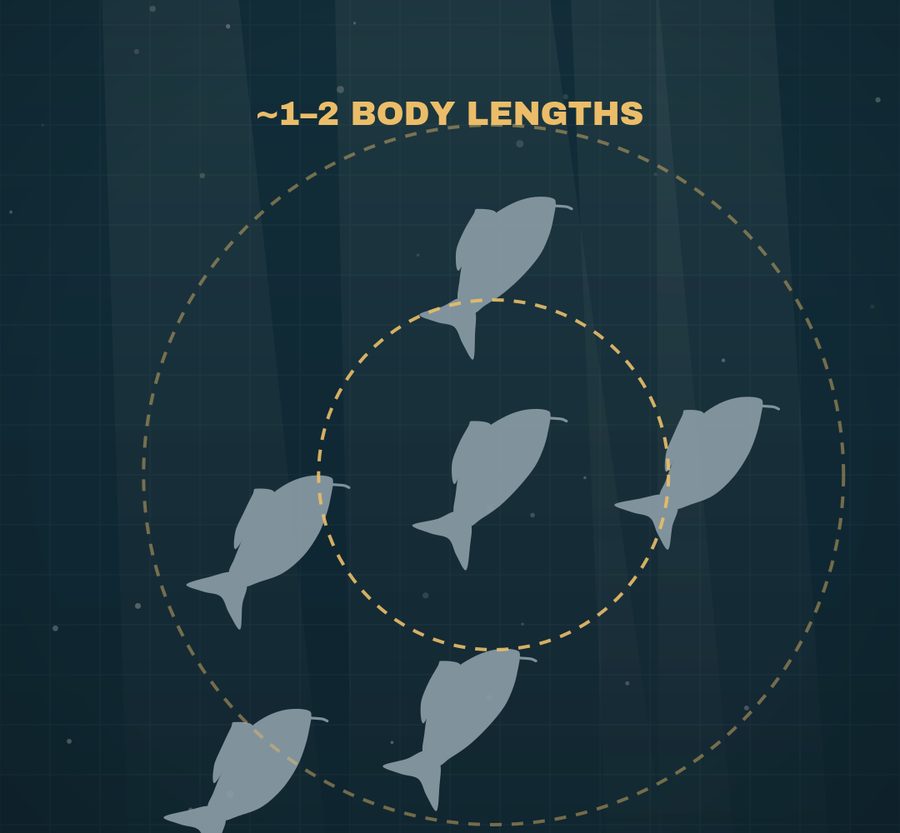
The lateral line works close up, within about one or two body lengths, depending on how big and strong the disturbance is. That's enough to feel a neighbour turning, prey moving, or an obstacle in the way. Classic experiments on schooling fish showed they could still school when blindfolded. The lateral line keeps the spacing right, even when vision can't help.
What it means on the bank
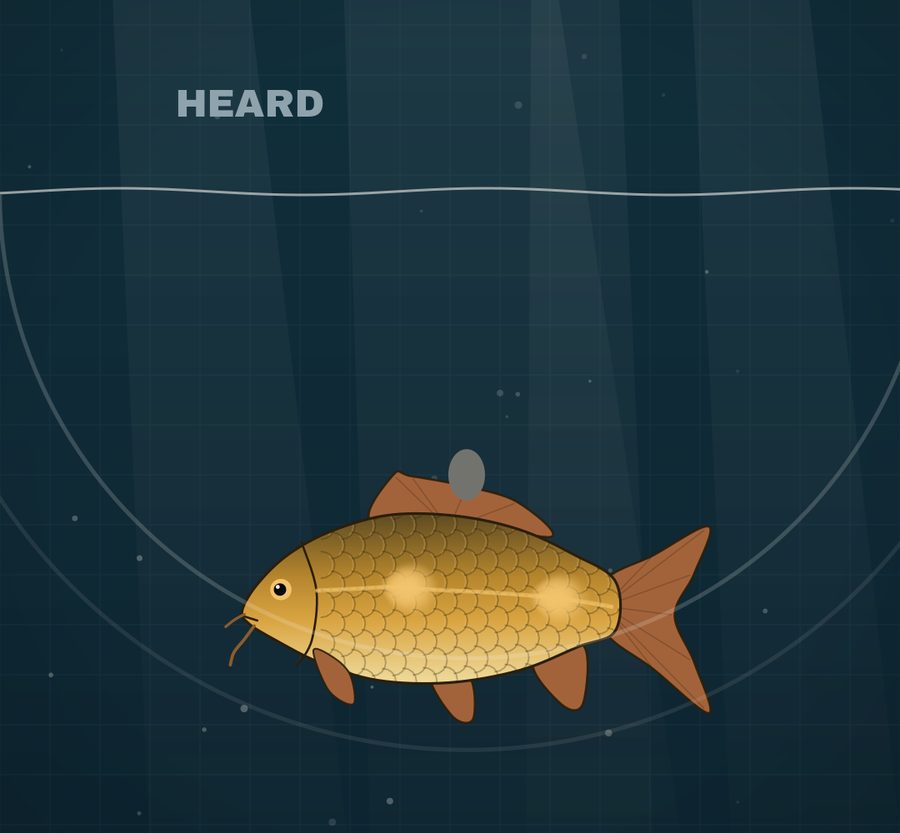
A lead crashing in right on top of carp isn't just heard (see Can Carp Hear You on the Bank? for how well carp hear). Within a body length or two, the splash and the push of water is something they feel. That's an inference from how the lateral line works, not a study of leads and carp, but it fits what anglers see when a swim goes quiet after a clumsy cast.
Where this comes from
Fish have a lateral line sense that humans lack
Bleckmann & Zelick (2009) Integrative Zoology 4:13–25, "Lateral line system of fish"
The trunk lateral line runs head to tail and opens to the water through pores in a row of scales
Standard fish anatomy (e.g. Coombs, Janssen & Webb 1988, in Sensory Biology of Aquatic Animals)
Canals are fluid-filled and hold neuromasts: clusters of hair cells under a jelly cupula
Bleckmann & Zelick (2009); Coombs et al. (1988)
They're the same kind of hair cell as in the vertebrate inner ear
Lateral-line and inner-ear hair cells are homologous mechanoreceptors (Coombs et al. 1988; Popper & Fay reviews)
Water movement moves canal fluid, bends the cupula and hairs, and fires the nerve
Bleckmann & Zelick (2009)
"Touch at a distance"
Dijkgraaf (1963) Biological Reviews 38:51–105 coined "Ferntastsinn", distant touch
Works close up, roughly one to two body lengths
Coombs (1999) and later reviews put the effective range for dipole sources at about 1–2 body lengths
Helps a shoal move together, including without vision
Partridge & Pitcher (1980) J. Comp. Physiol. 135:315–325: blindfolded saithe still schooled; lateral line cut changed spacing
A lead landing close by is felt by the lateral line, not just heard
Follows from the above: a splash within a body length or two is a strong near-field water movement