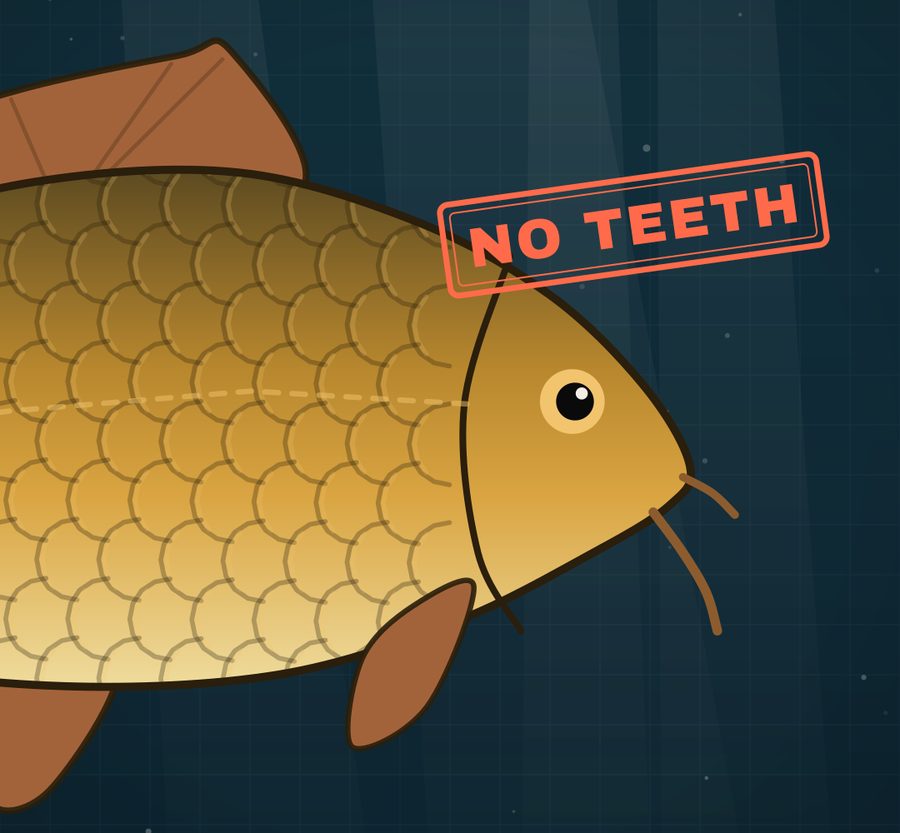
Carp don't have a single tooth in their mouth.
Open a carp's mouth and you won't find a single tooth. They're there, just not where you'd look. A carp's teeth are in its throat.
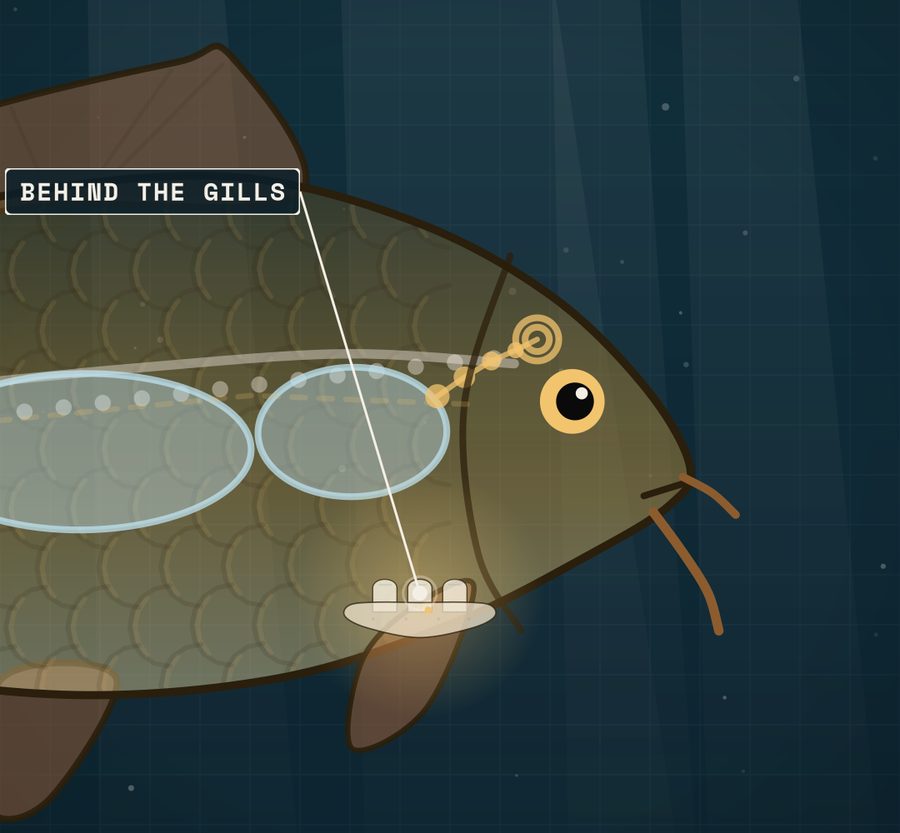
Teeth behind the gills
Right behind the gills, on the last gill arch, carp have a left and right pair of bones lined with heavy, molar-like grinding teeth. They're called pharyngeal teeth ("pharynx" means throat). In common carp they sit in three rows, which the animation simplifies to one.
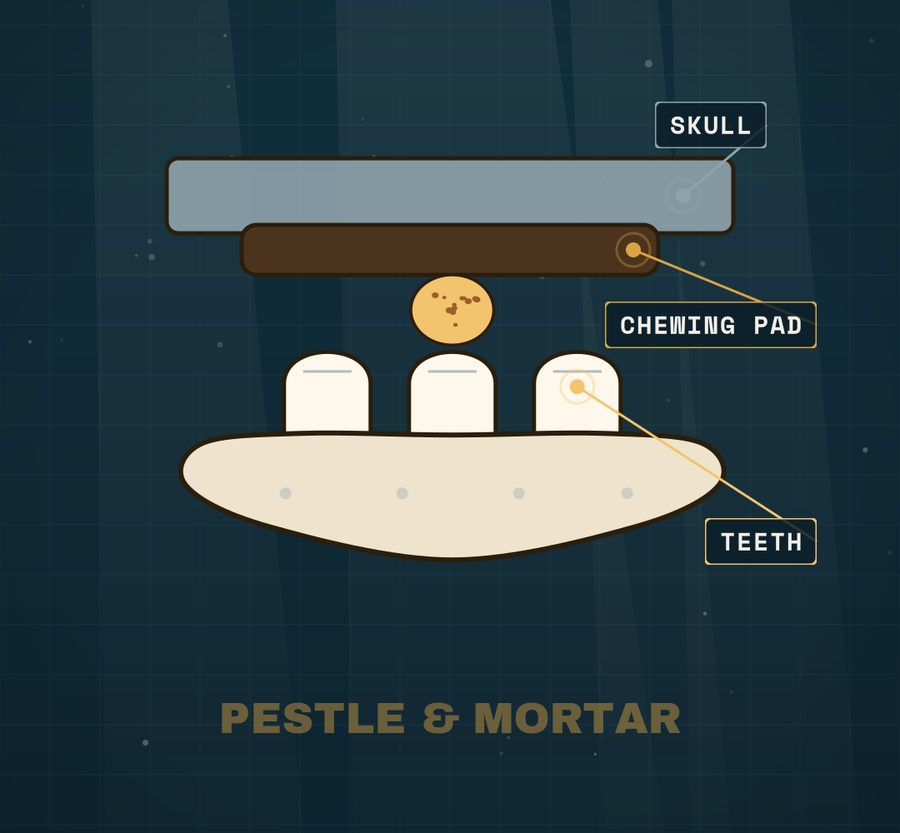
A pestle and mortar
Teeth need something to grind against. Carp crush their food against a hard, horny chewing pad on a bony projection at the base of the skull. The tooth bones lift and press food against the pad, like a pestle working against a mortar. F. A. Sibbing's studies of carp feeding in the 1980s describe the mechanism in detail.
Built for hard food
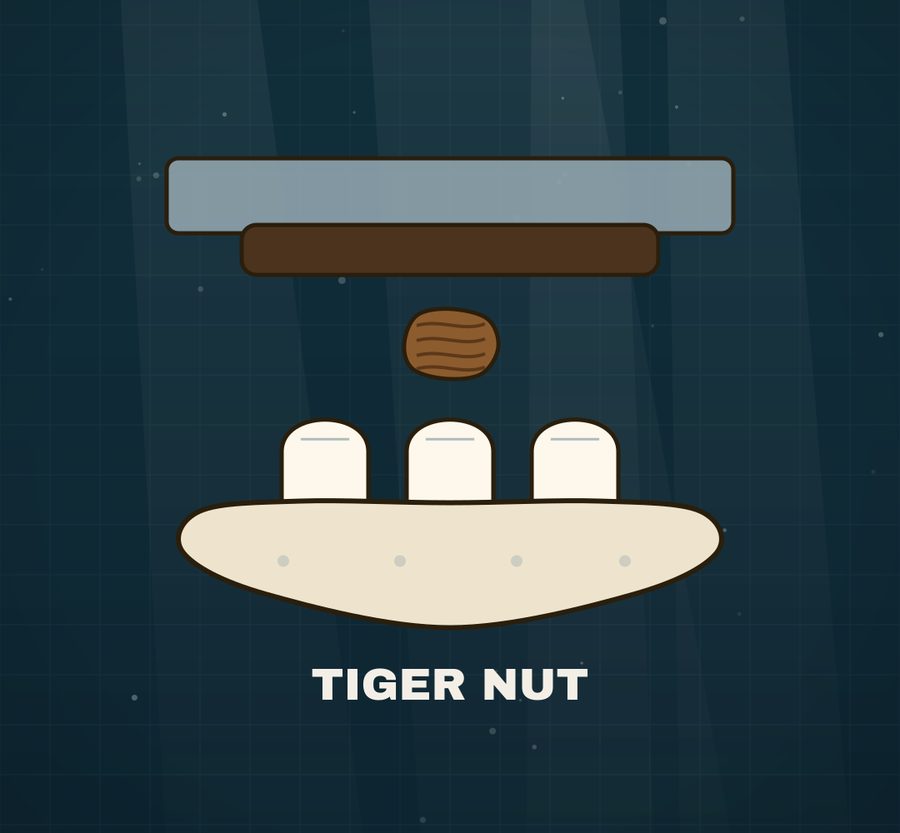
This is how carp handle food that would defeat a fish with ordinary jaws. Snails and mussels are a regular part of the wild carp diet, and the throat teeth crack the shells. The same crushing power deals with hard baits: anglers know carp happily eat rock-hard particles like tiger nuts.
Replaced for life
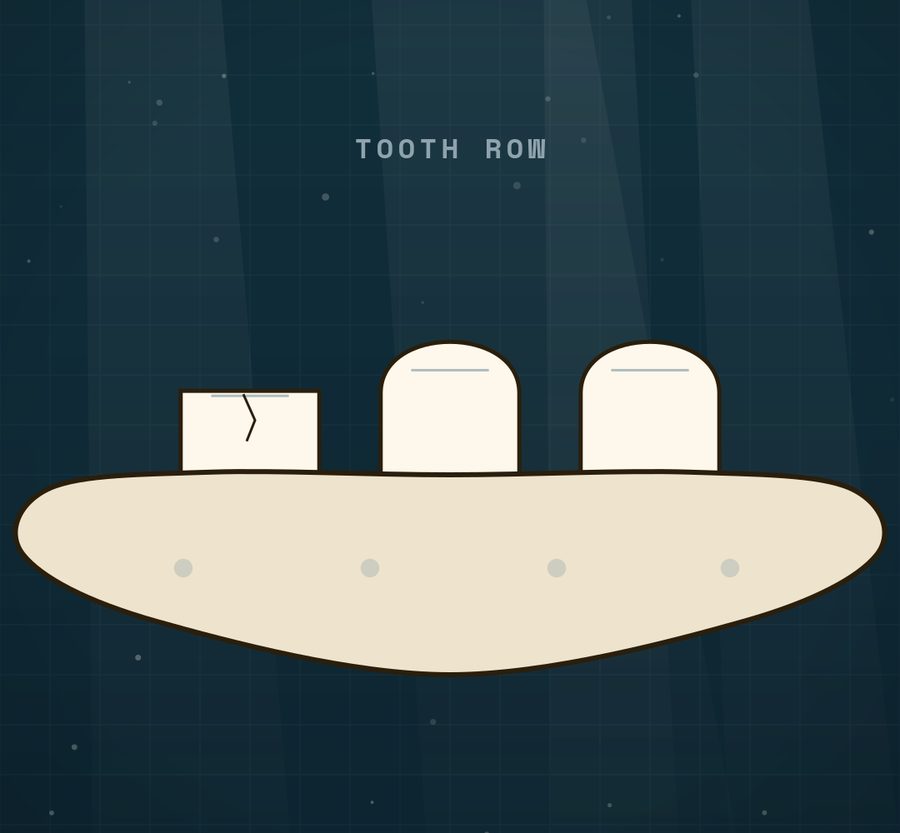
Grinding shells wears teeth down. Carp's relatives in the same family are known to replace their pharyngeal teeth throughout life, losing worn teeth and growing new ones from the bone, again and again. It's well documented in the zebrafish, a cyprinid, and carp are expected to work the same way.
What about grass carp?
Grass carp have pharyngeal teeth too, but theirs are serrated, built for shredding plants rather than crushing shells. Same idea, different toolkit.
How we know: the sources
Every claim in the video, where it comes from, and how sure we are.
-
Carp (Cyprinidae) have no teeth in their jaws
SOURCE Standard ichthyology, e.g. Helfman et al., The Diversity of Fishes (2009)
CONFIDENCE High
-
Pharyngeal teeth sit on the last (fifth) gill arch, just behind the gills, in a left and right pair
SOURCE Sibbing, F.A. (1982), Pharyngeal mastication and food transport in the carp, J. Morphology 172: 223–258
CONFIDENCE High.
-
Common carp have three rows of heavy, molar-like grinding teeth (formula 1.1.3–3.1.1)
SOURCE Standard identification keys; Sibbing (1982)
CONFIDENCE High. The animation simplifies it to one row of three.
-
The teeth crush food against a horny chewing pad on a process at the base of the skull (basioccipital)
SOURCE Sibbing (1982); Sibbing (1988), Env. Biol. Fishes 22: 161–178
CONFIDENCE High
-
"Like a pestle and mortar"
SOURCE A teaching analogy
CONFIDENCE Fair analogy
-
Carp eat and crush snails and mussels
SOURCE Diet studies of Cyprinus carpio; molluscs are a common part of the diet
CONFIDENCE High
-
Carp can crush hard baits such as tiger nuts
SOURCE Angler experience; follows from the crushing power above
CONFIDENCE Medium-high. Illustrative.
-
Pharyngeal teeth are replaced throughout life
SOURCE Lifelong tooth replacement is documented in cyprinids, e.g. Van der heyden & Huysseune (2000), Development 127, on the zebrafish (a cyprinid)
CONFIDENCE Medium-high. Verify for C. carpio specifically. We say "again and again", not a rate.