Carp have a sense we simply don't have. It's called the lateral line.
Carp have a sense we simply don't have. It runs along their side in a line you've probably looked at a hundred times without realising it's a sense organ: the lateral line.
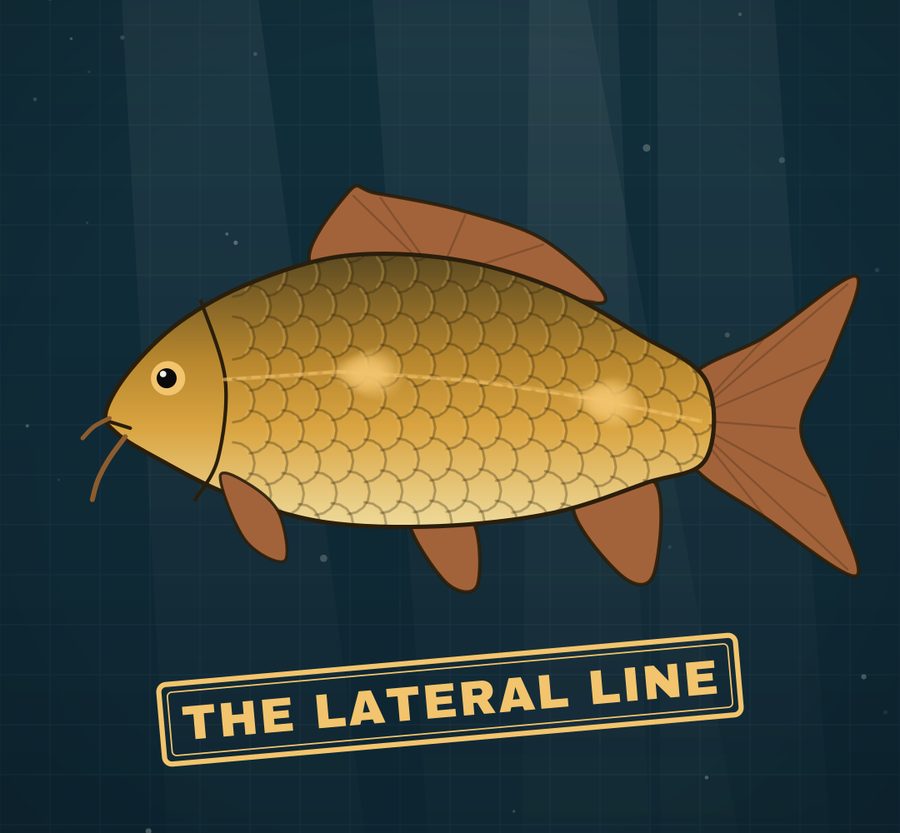
A line of tiny holes
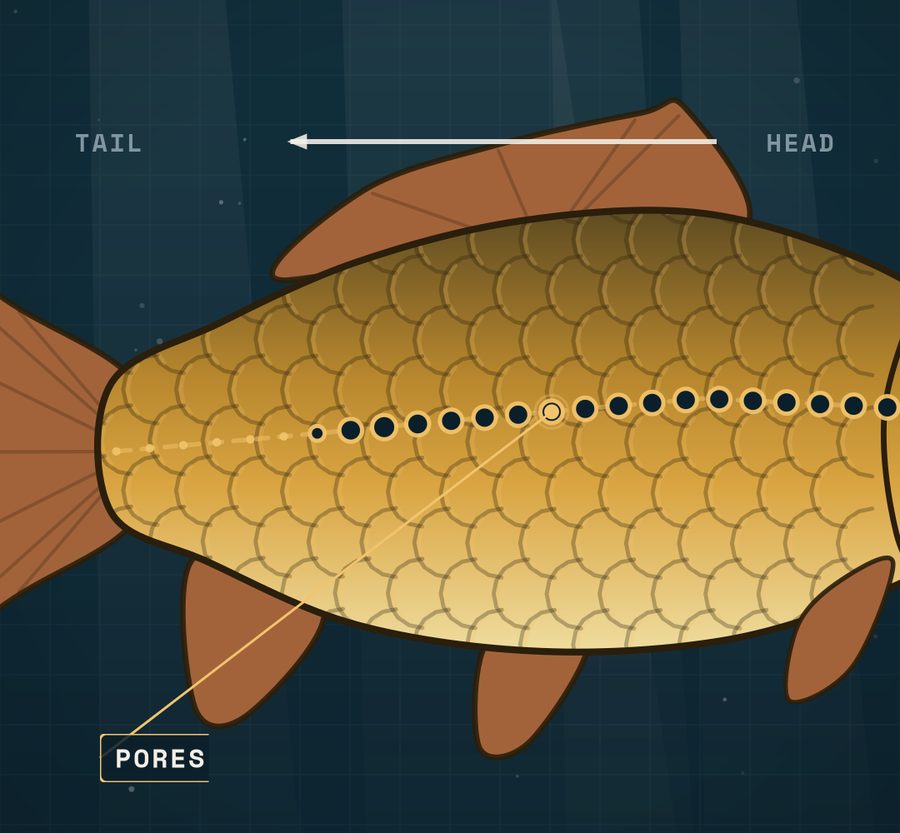
Look closely along a carp's flank and you'll see a row of scales running from head to tail, each with a tiny pore in it. There are more of these canals around the head too.
What's under the skin
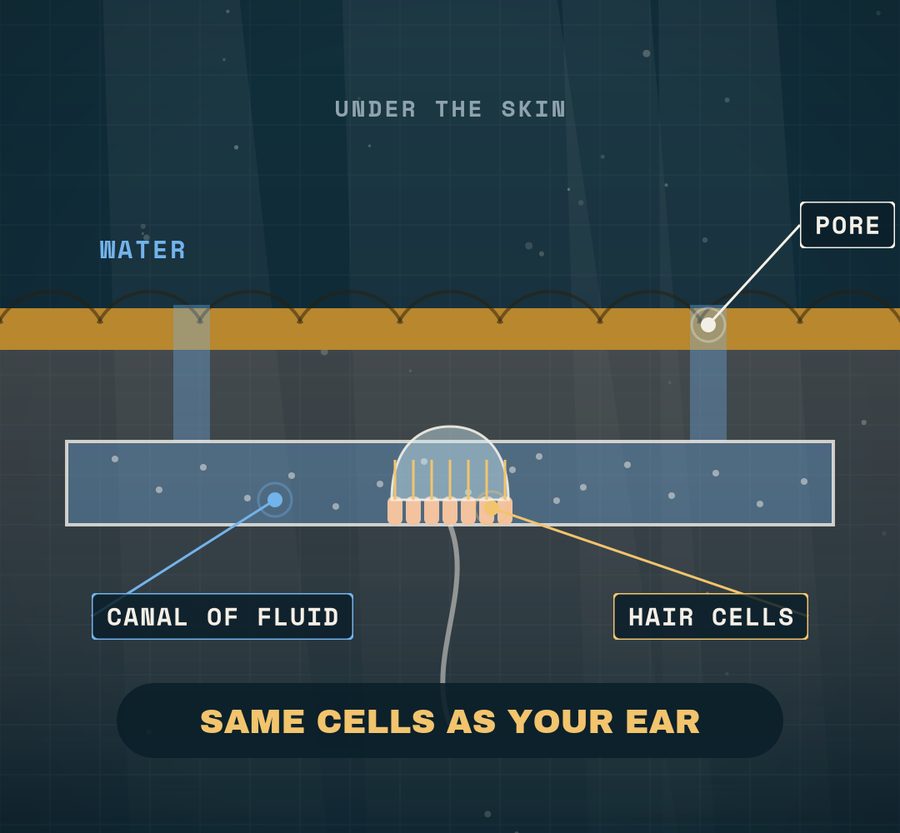
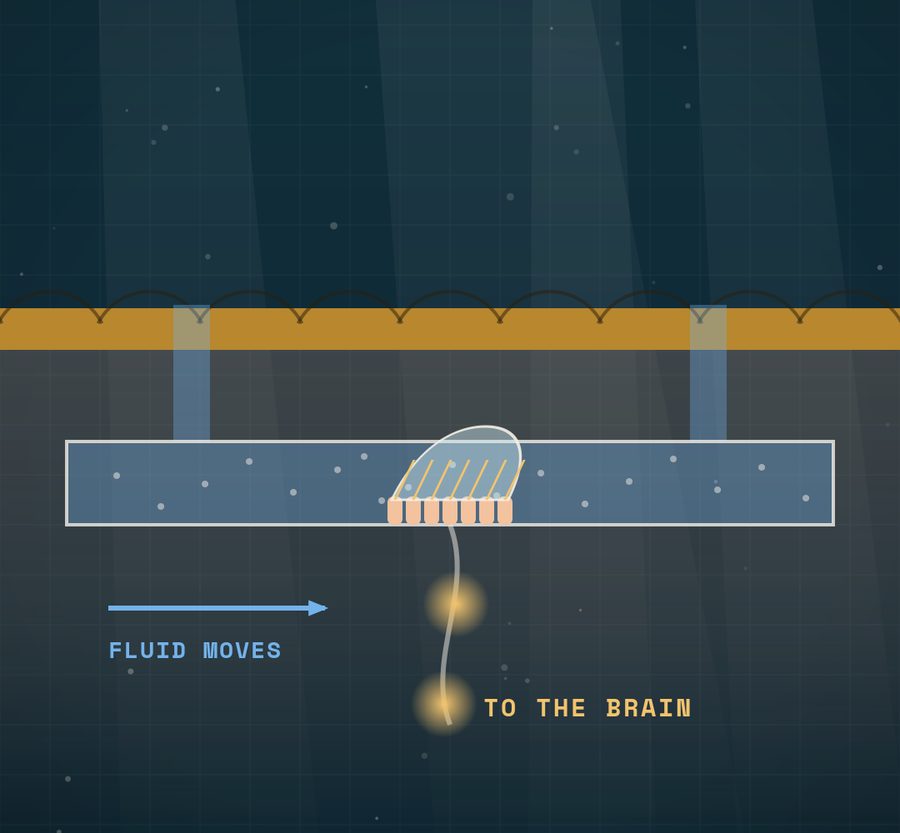
Each pore opens into a canal running under the skin, filled with fluid. Along the canal sit clusters of sensory cells called neuromasts. Each one is a group of hair cells with their tiny hairs embedded in a soft, jelly-like cap called a cupula. They're the same kind of cell as the hair cells in your inner ear that let you hear.
How it works
When the water next to the fish moves, it pushes on the fluid in the canals. The fluid moves, the cupula bends, the hairs bend with it, and the hair cells fire signals to the brain. The carp feels the movement of the water around it. In the 1960s, the biologist Sven Dijkgraaf called it "touch at a distance".
Close-range, but powerful
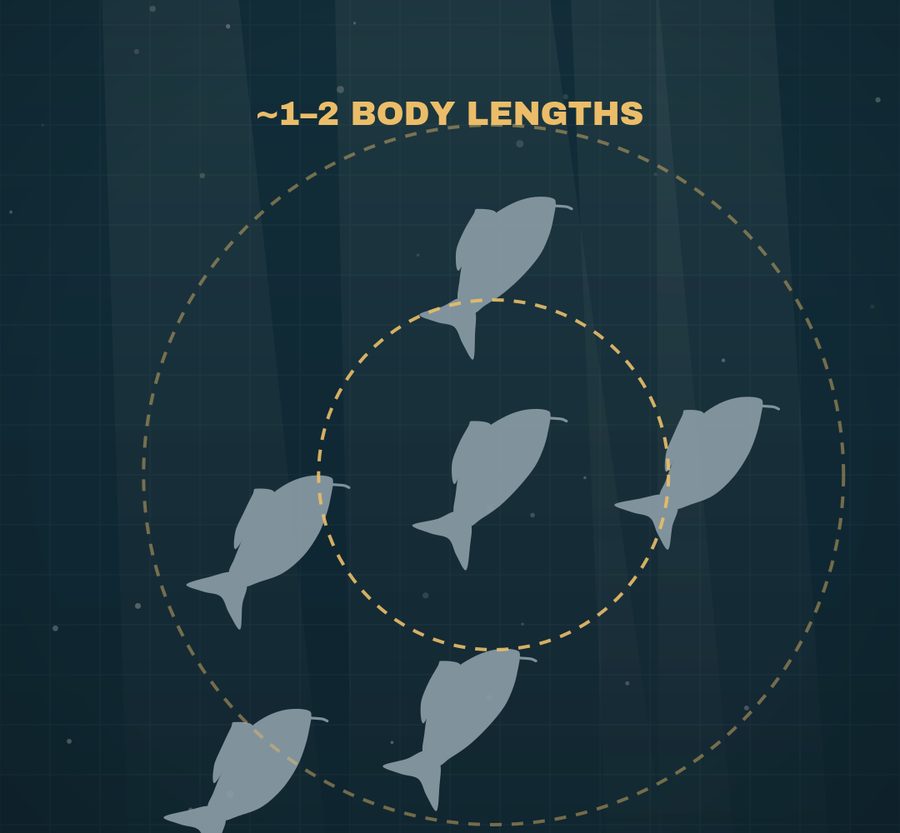
The lateral line works close up, within about one or two body lengths, depending on how big and strong the disturbance is. That's enough to feel a neighbour turning, prey moving, or an obstacle in the way. Classic experiments on schooling fish showed they could still school when blindfolded. The lateral line keeps the spacing right, even when vision can't help.
What it means on the bank
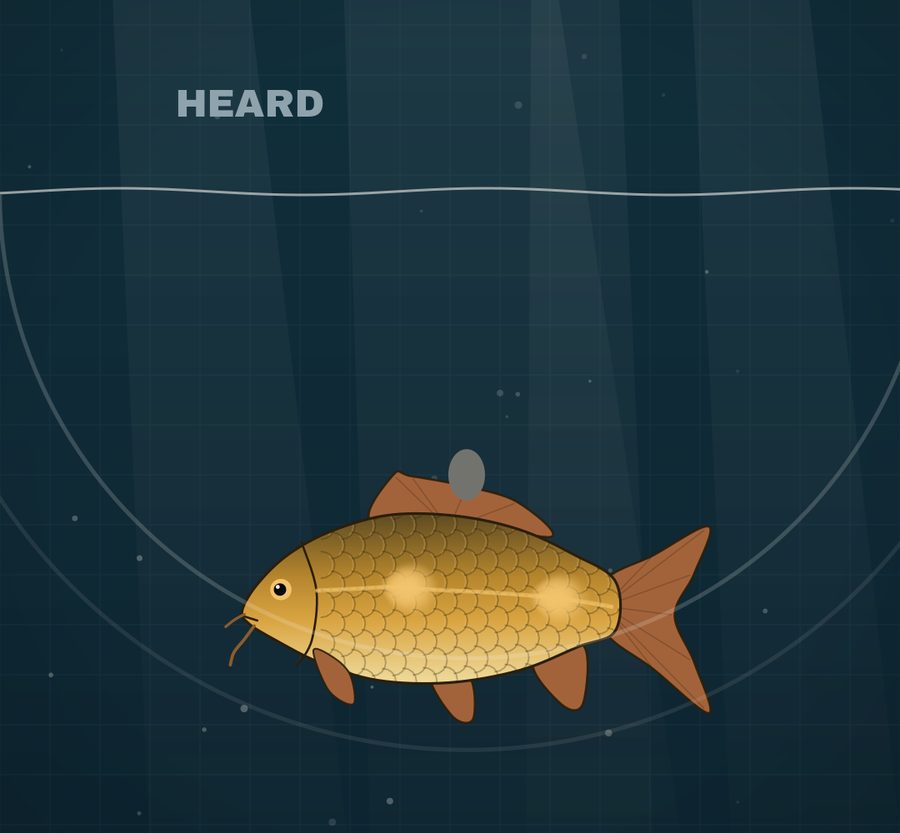
A lead crashing in right on top of carp isn't just heard (see FILE 002 for how well carp hear). Within a body length or two, the splash and the push of water is something they feel. That's an inference from how the lateral line works, not a study of leads and carp, but it fits what anglers see when a swim goes quiet after a clumsy cast.
How we know: the sources
Every claim in the video, where it comes from, and how sure we are.
-
Fish have a lateral line sense that humans lack
SOURCE Bleckmann & Zelick (2009) Integrative Zoology 4:13–25, "Lateral line system of fish"
CONFIDENCE High
-
The trunk lateral line runs head to tail and opens to the water through pores in a row of scales
SOURCE Standard fish anatomy (e.g. Coombs, Janssen & Webb 1988, in Sensory Biology of Aquatic Animals)
CONFIDENCE High
-
Canals are fluid-filled and hold neuromasts: clusters of hair cells under a jelly cupula
SOURCE Bleckmann & Zelick (2009); Coombs et al. (1988)
CONFIDENCE High
-
They're the same kind of hair cell as in the vertebrate inner ear
SOURCE Lateral-line and inner-ear hair cells are homologous mechanoreceptors (Coombs et al. 1988; Popper & Fay reviews)
CONFIDENCE High. "Same kind", not identical.
-
Water movement moves canal fluid, bends the cupula and hairs, and fires the nerve
SOURCE Bleckmann & Zelick (2009)
CONFIDENCE High
-
"Touch at a distance"
SOURCE Dijkgraaf (1963) Biological Reviews 38:51–105 coined "Ferntastsinn", distant touch
CONFIDENCE High
-
Works close up, roughly one to two body lengths
SOURCE Coombs (1999) and later reviews put the effective range for dipole sources at about 1–2 body lengths
CONFIDENCE High as a rule of thumb. It depends on source size and strength.
-
Helps a shoal move together, including without vision
SOURCE Partridge & Pitcher (1980) J. Comp. Physiol. 135:315–325: blindfolded saithe still schooled; lateral line cut changed spacing
CONFIDENCE High for schooling generally. Carp-specific "muddy water at night" is an illustration.
-
A lead landing close by is felt by the lateral line, not just heard
SOURCE Follows from the above: a splash within a body length or two is a strong near-field water movement
CONFIDENCE Medium-high. The inference is from general physiology, not a carp lead study.