This tiny piece of line changed carp fishing forever.
A few centimetres of line changed carp fishing more than any bait or rod ever has. The hair rig works because of how carp eat, and the story of how it was invented is a good one.
Before the hair
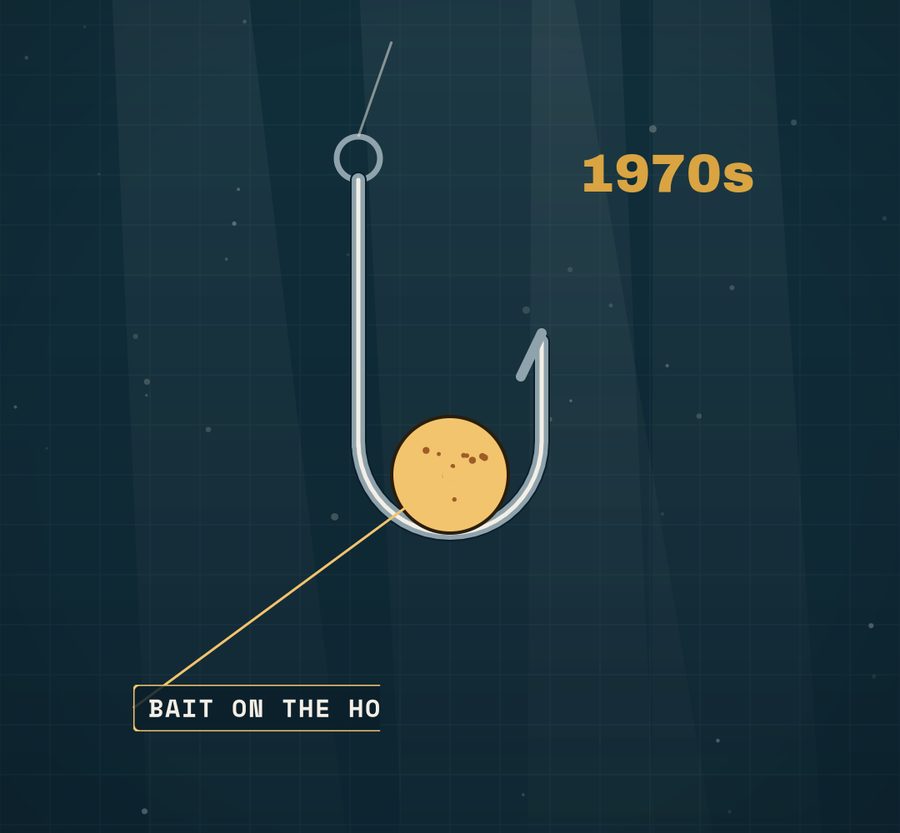
Through the 1970s, the standard way to present a bait was to put it straight onto the hook. It caught fish, but carp on many waters got very good at avoiding it.
How carp actually feed
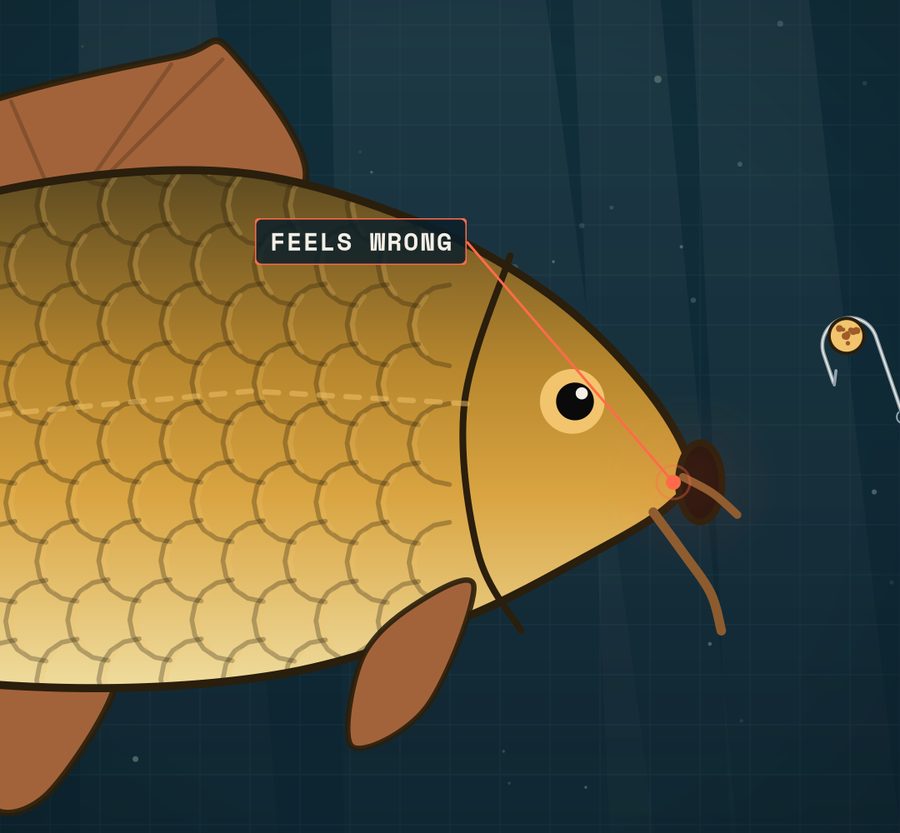
Carp don't bite in the way we might imagine. They feed by suction: they suck food into the mouth, sort and test it, and if something feels wrong, they blow it straight back out. Research on carp feeding (notably by F. A. Sibbing in the 1980s) describes this sorting process in detail. A bait with a heavy, stiff hook buried in it is exactly the kind of thing that gets rejected.
The radical idea
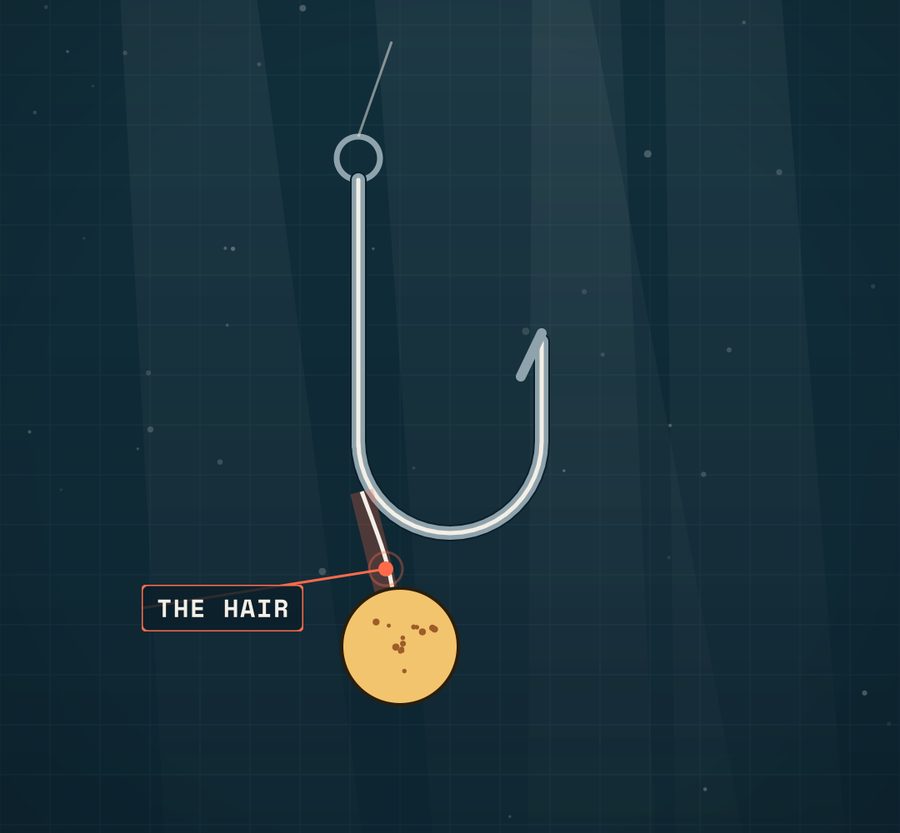
In the late 1970s, Kevin Maddocks and Lenny Middleton tried something that sounded backwards: tie the bait to a thin hair of line, hanging away from the hook. Now the carp sucks in the bait, which feels completely natural, and the light, bare hook follows it in unnoticed.

Why it hooks the fish
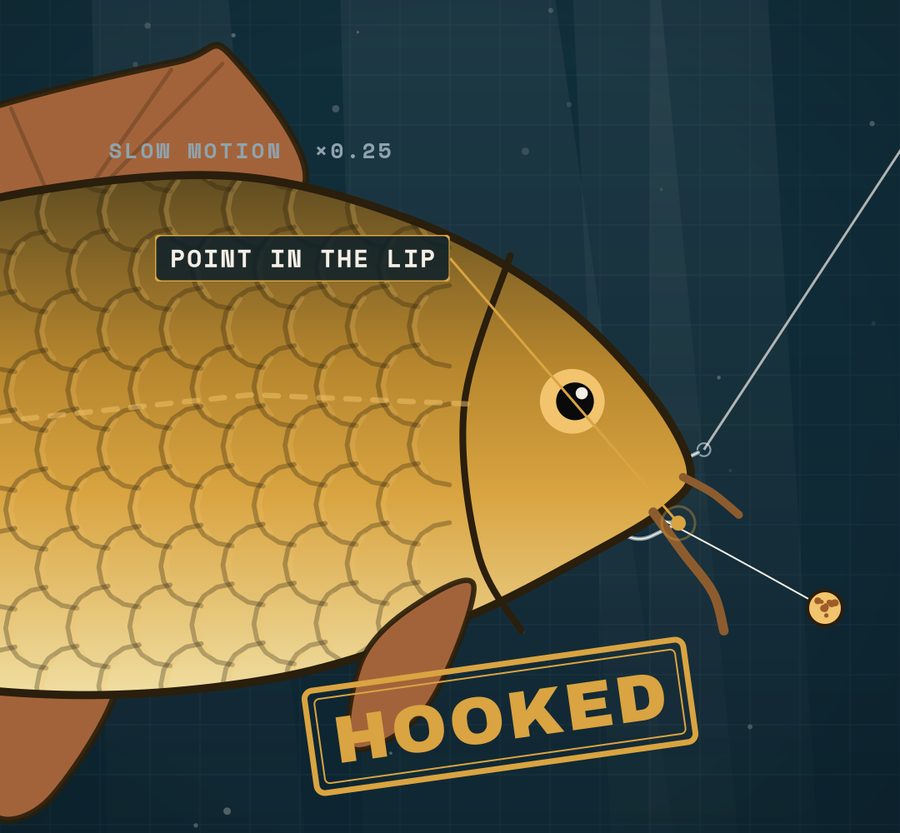
The clever part happens when the carp tries to get rid of the bait. As it blows the bait back out, the bare hook behind it turns, and the point catches in the bottom lip. The animation shows this as a clean diagram. Real hooking also involves the hook's weight and angle, the lead, and how sharp the point is (FILE 008).
Secret, then everywhere
The pair reportedly kept the idea quiet at first, which is a well-worn part of the story. Once it got out, it spread through the carp world, and almost every modern carp rig is a descendant of it.

The arms race continues
Carp are still learning. A fish caught once becomes harder to catch (FILE 001), and anglers on pressured waters see rig-shy fish all the time. That's why rigs keep evolving.
How we know: the sources
Every claim in the video, where it comes from, and how sure we are.
-
Hair rig developed by Kevin Maddocks and Lenny Middleton in the late 1970s
SOURCE Maddocks, K. Carp Fever (1981), plus angling histories generally
CONFIDENCE High
-
"Reportedly kept it secret at first"
SOURCE A widely repeated part of the story in angling media
CONFIDENCE Medium, hence "reportedly". Don't state a duration.
-
Before the hair, baits were mounted directly on the hook
SOURCE Angling history
CONFIDENCE High
-
Carp feed by suction, sort food from non-food in the mouth, and expel rejected items
SOURCE Sibbing, F.A. (1988), Specializations and limitations in the utilization of food resources by the carp, Environmental Biology of Fishes 22: 161–178
CONFIDENCE High.
-
A bare hook following the bait in, then catching the lip as the fish tries to expel it
SOURCE The accepted mechanism in angling. Underwater footage shows carp trying to eject rigs.
CONFIDENCE High (mechanism), but the animation is schematic: real hooking involves hook weight, angle and lead/bolt effects, simplified here.
-
"Changed carp fishing forever"
SOURCE An editorial claim, near-universal in angling literature
CONFIDENCE Fine as opinion
-
"Carp are learning again"
SOURCE Ties to FILE 001 (Beukema 1970, one-trial learning) plus widespread angler observation of rig-shy fish
CONFIDENCE Medium-high. Phrased as a general trend.