This carp has been caught before. And it remembers.
Every carp angler has met the fish that just won't be caught twice. It isn't folklore. In 1970 a Dutch scientist measured it, and what he found explains a lot about how carp feed, and why the hair rig had to be invented.
One bad experience is enough
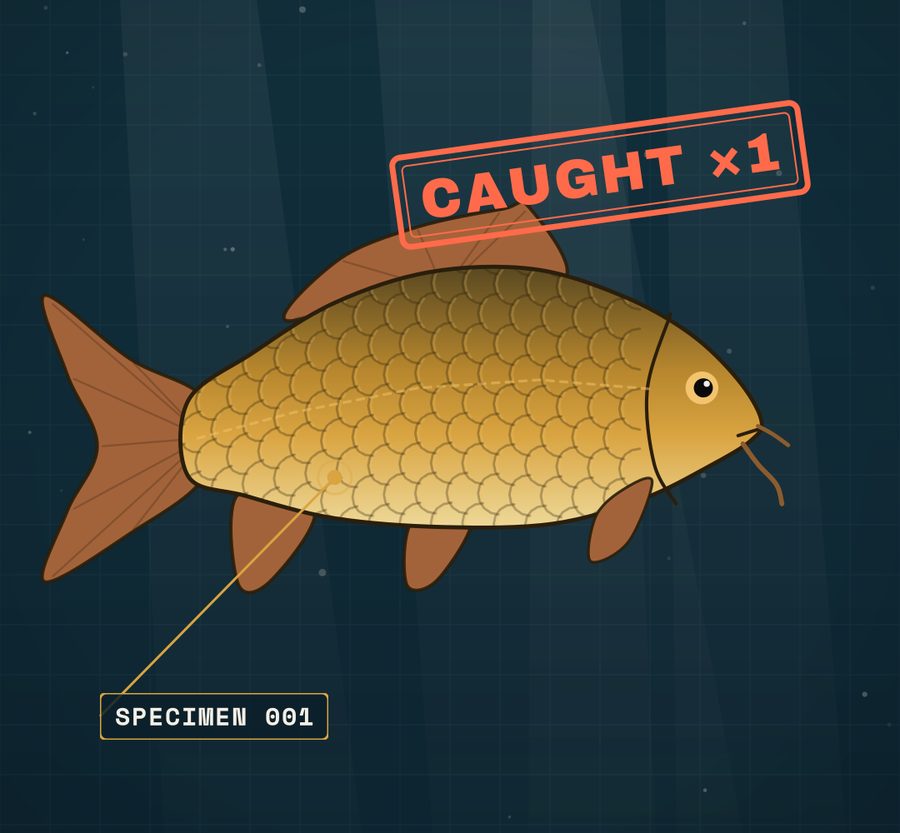
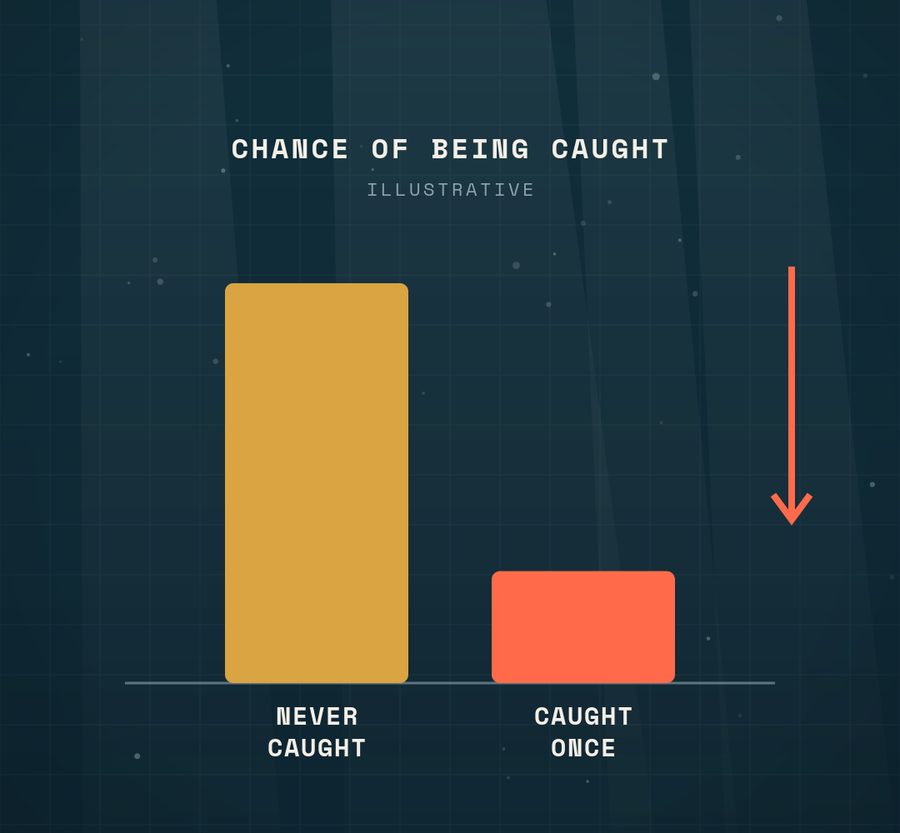
The study was by J. J. Beukema, who ran angling experiments with carp in the Netherlands. Fish that had been hooked just once became far harder to catch afterwards. He called it one-trial learning: the carp didn't need repeated lessons, one was enough.
That's a striking result for an animal many people assume has a three-second memory. So how does a carp actually spot the trap? Two senses do most of the work.
First, they hear you
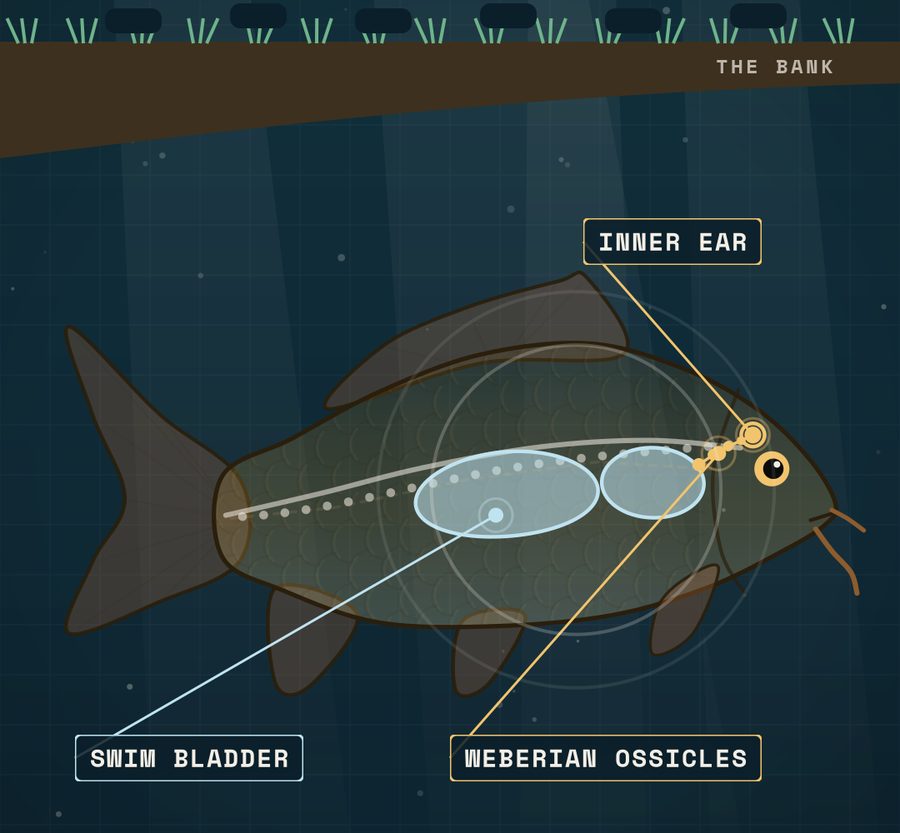
Carp belong to a group of fish (the Ostariophysi) with a hearing upgrade. A chain of tiny bones, the Weberian ossicles, connects the gas-filled swim bladder to the inner ear. Sound makes the bladder vibrate, and the bones pass that vibration on, so the bladder works a bit like a microphone. FILE 002 goes into this in detail, including why your footsteps matter more than your voice.
Second, they taste before they swallow
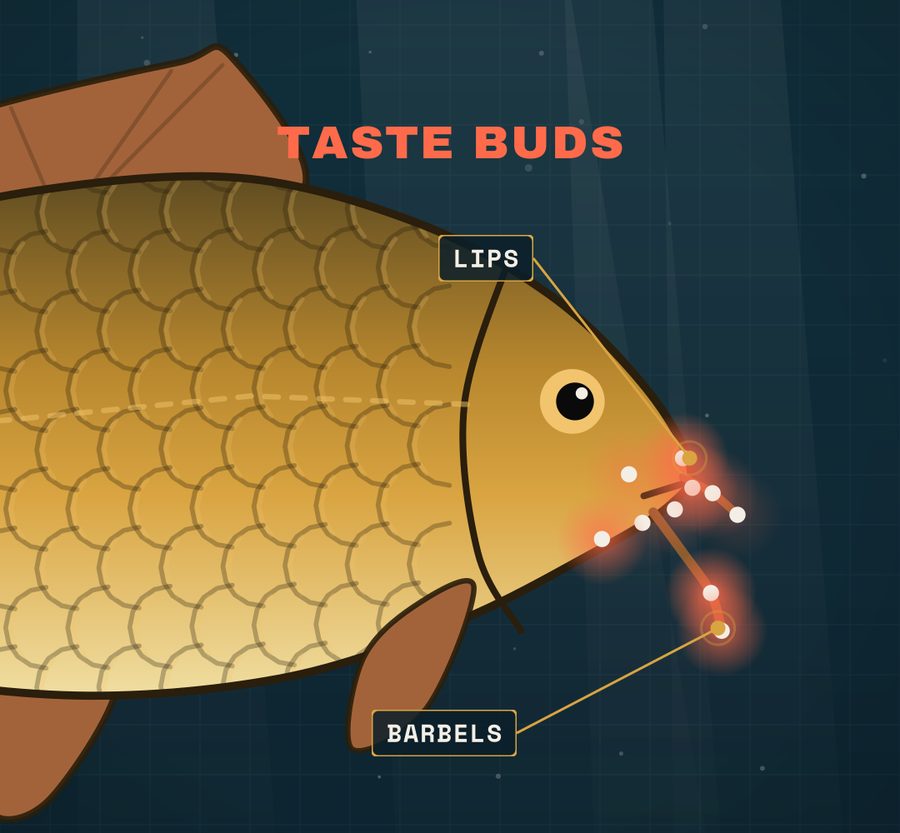
Carp have taste buds on their lips, on their barbels and inside their mouth. Food gets sampled before it's committed to. If something tastes or feels wrong, a carp simply blows it back out. Anyone who has watched underwater footage of carp feeding over a rig has seen this happen again and again.
Why the hair rig exists
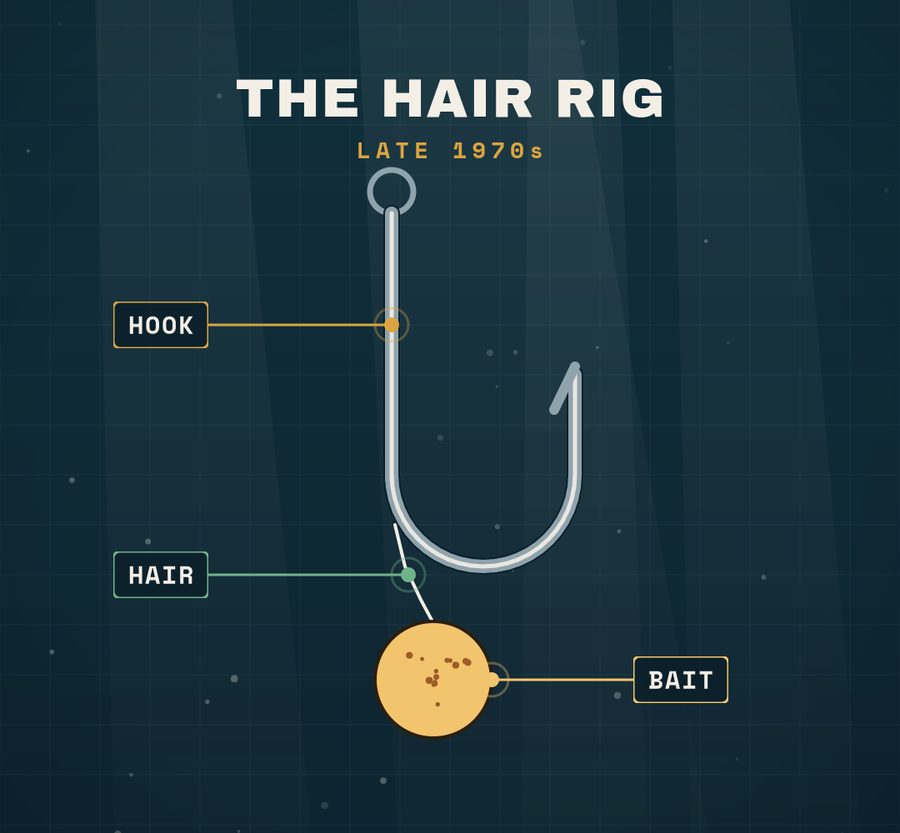
That spit reflex is the problem the hair rig solved. In the late 1970s, Kevin Maddocks and Lenny Middleton started mounting the bait on a thin "hair" of line instead of on the hook. The carp can test the bait without feeling the hook, and when it tries to blow the bait out, the bare hook catches. FILE 003 tells that story properly.
The oldest fish have had the most practice
Common carp can live for decades, and you can count their years in the growth rings on their scales (FILE 009). Size and age don't line up perfectly, but the biggest fish in a lake have usually had the most time, and the most encounters with anglers, to learn from.
How we know: the sources
Every claim in the video, where it comes from, and how sure we are.
-
Carp hooked once become harder to catch; one-trial learning
SOURCE Beukema, J.J. (1970). Angling experiments with carp (Cyprinus carpio L.) II. Decreasing catchability through one-trial learning. Netherlands Journal of Zoology 20(1): 81–92
CONFIDENCE High. We don't state numbers on screen, and the chart is labelled illustrative.
-
Weberian ossicles link the swim bladder to the inner ear, improving hearing (all Ostariophysi, including carp)
SOURCE Standard ichthyology, e.g. Helfman et al., The Diversity of Fishes (2009)
CONFIDENCE High
-
"Bladder works like a microphone"
SOURCE An analogy: the gas-filled bladder vibrates with sound pressure and the ossicles pass that to the ear
CONFIDENCE Fair analogy
-
Taste buds on lips, barbels and in the mouth
SOURCE Kasumyan & Døving (2003), Taste preferences in fishes, Fish and Fisheries 4: 289–347
CONFIDENCE High
-
Carp reject suspicious food items by blowing them out
SOURCE Widely observed in underwater angling footage. This is the premise of the hair rig.
CONFIDENCE High (observational)
-
Hair rig developed in the late 1970s (Kevin Maddocks & Lenny Middleton)
SOURCE Angling history, e.g. Maddocks, Carp Fever (1981)
CONFIDENCE High
-
Common carp can live for decades
SOURCE Fisheries literature. Wild fish of 20+ years are common, and older ages are documented.
CONFIDENCE High
-
Fish age can be read from annual rings (annuli) on scales
SOURCE Standard fisheries ageing method
CONFIDENCE High
-
"Biggest fish are the oldest / most experienced"
SOURCE An inference. Size correlates with age, but not perfectly, hence "often" and "most time to learn".
CONFIDENCE Phrased carefully