Do Carp Feed in Winter?
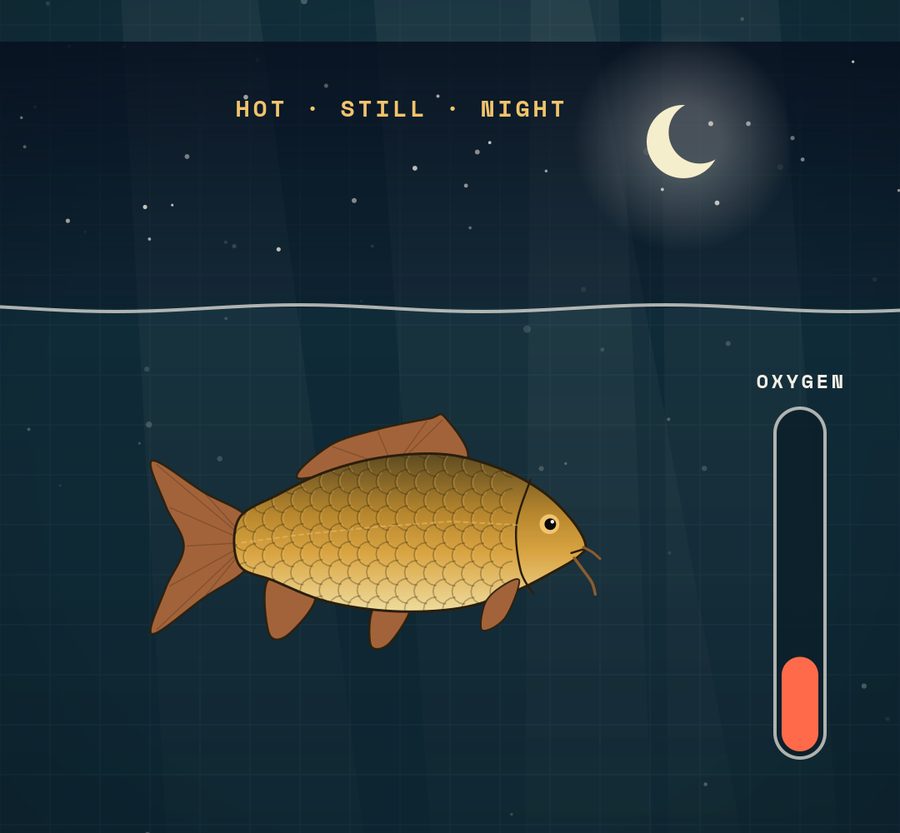
In midwinter, a carp can go days barely eating. It isn't sulking or "switched off". It's chemistry, and once you understand it, winter fishing makes a lot more sense.
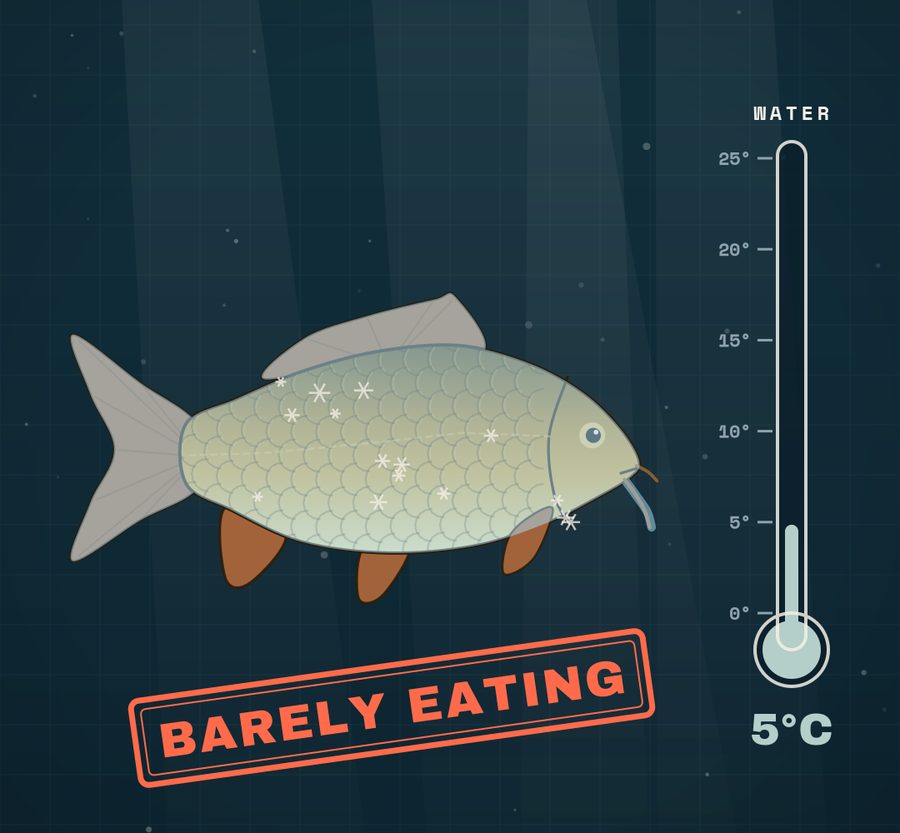
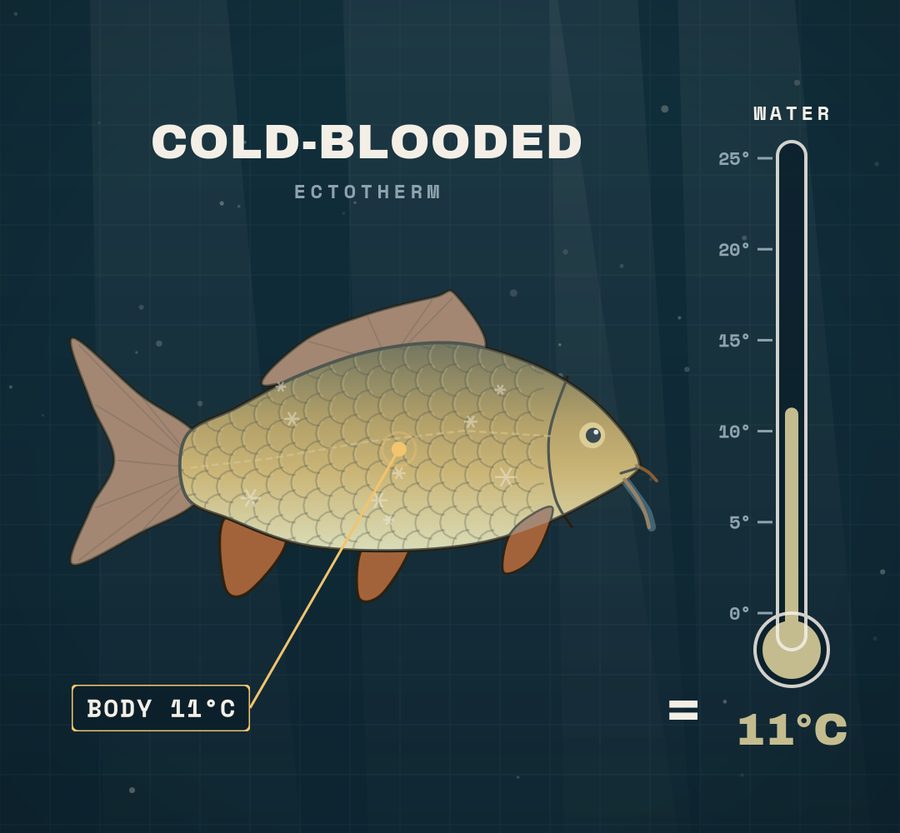
Cold-blooded means water-temperature
Carp are ectotherms: their body is the same temperature as the water around them. When the lake cools, so does every cell in the fish.
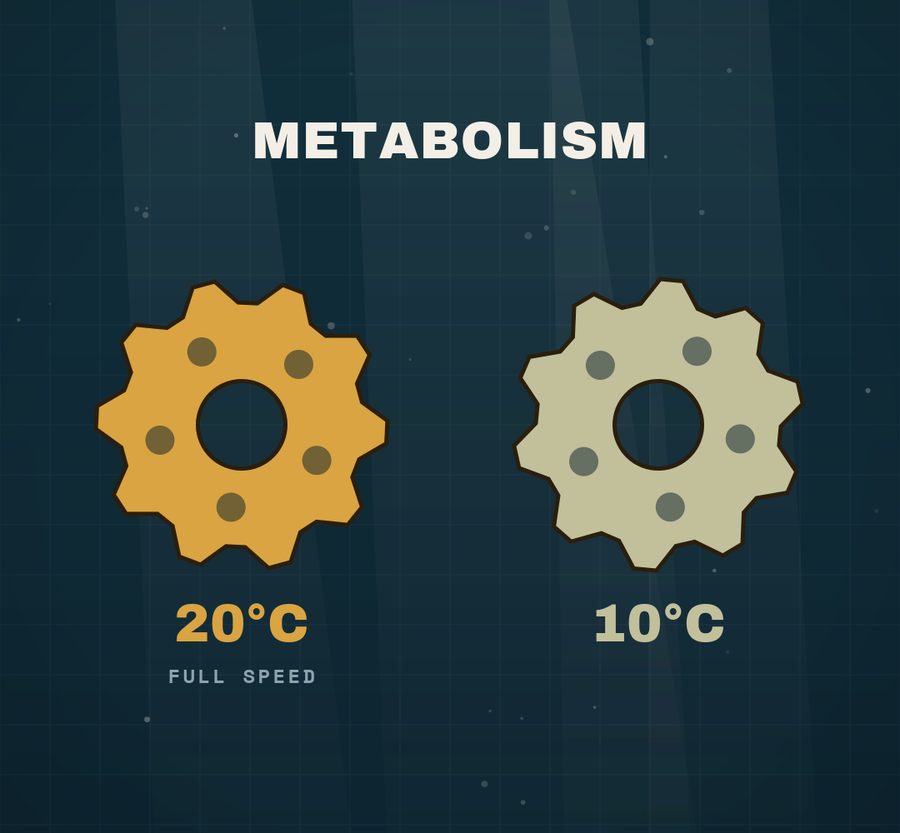
The metabolism gears
The chemical reactions that run a body slow down as it gets colder. Biologists describe this with a number called Q10: how much faster a rate gets for every 10 °C warmer. For most biological processes it's between 2 and 3. Turn that around, and a 10 °C drop means a carp's metabolism runs at roughly half speed, or even slower.
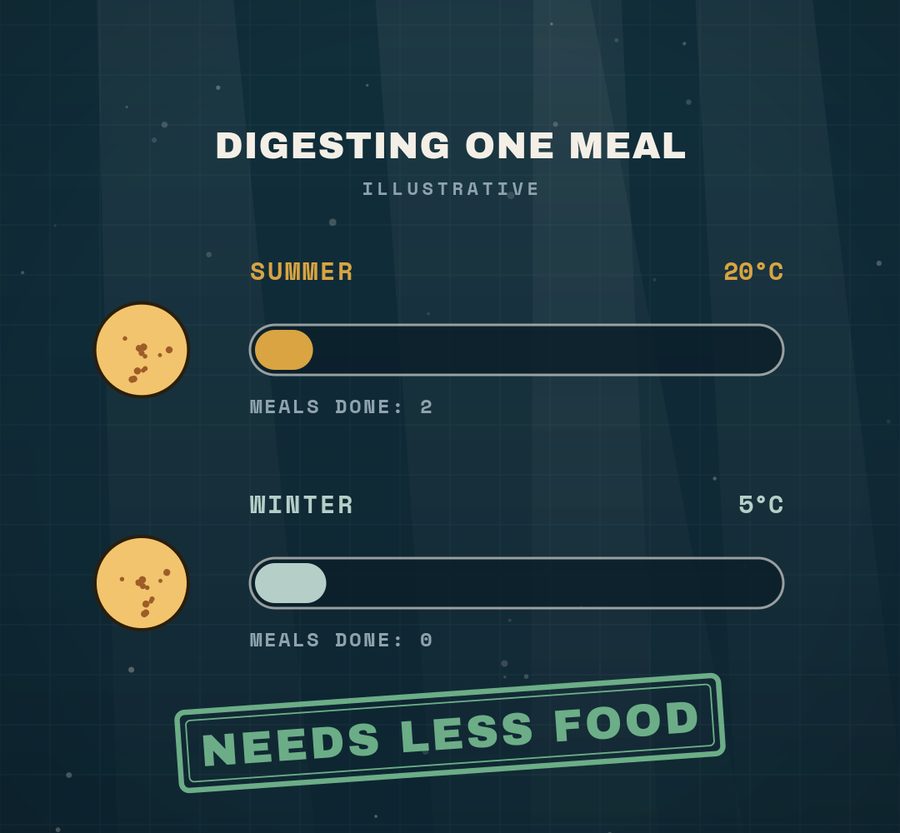
Slower digestion, smaller appetite
With everything slowed down, food takes far longer to pass through the gut, and the fish needs much less of it. Feeding falls off sharply in cold water. Carp do still feed and get caught in winter, so it isn't "never". It's "much less, and less often".
The 4 °C trick
Fresh water is at its heaviest at about 4 °C. When a lake cools in winter, water at 4 °C sinks to the bottom. Colder water floats above it, and ice forms on top. So under the ice, the water just below the surface is near 0 °C, while the deepest water stays near 4 °C all winter. This layering is called inverse stratification.
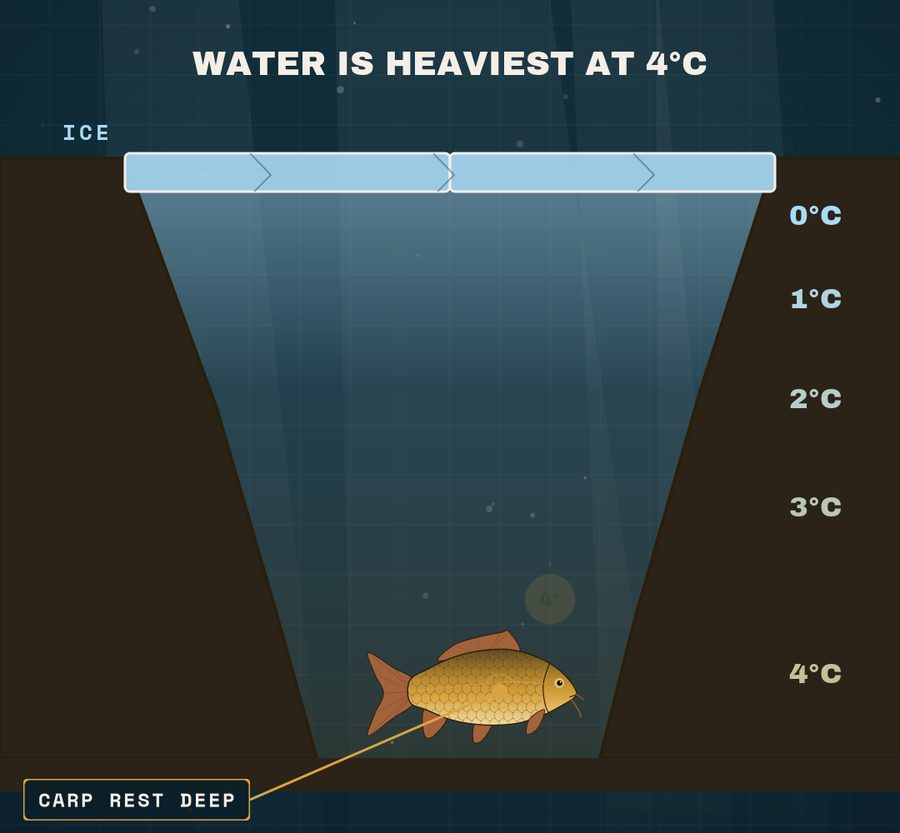
It only works fully in lakes deep enough and sheltered enough not to get mixed by the wind. Shallow lakes can be cold from top to bottom.
Where this comes from
Carp are ectotherms: body temperature tracks water temperature
Standard fish physiology, e.g. Helfman et al., The Diversity of Fishes (2009)
A 10°C drop slows metabolic rate to ~½ or less (Q10 ≈ 2–3)
Q10 of 2–3 is the textbook range for biological rates, e.g. Schmidt-Nielsen, Animal Physiology (1997). Clarke & Johnston (1999), J. Animal Ecology 68: 893–905, for fish specifically.
"Carp can go days barely eating" in winter
Carp feeding intensity falls sharply in cold water (FAO Cultured Aquatic Species: Cyprinus carpio fact sheet) plus angler experience
Slower digestion, so less food needed
Gut passage time lengthens as temperature falls (general fish physiology)
Fresh water is densest at ~4°C (3.98°C)
Basic physics
Under ice, the water just below the ice is ~0°C and the deep water stays near 4°C
Inverse winter stratification: Wetzel, Limnology (2001)
"Fish where the water is warmest"
Follows from the above. In practice this can be deeper water, or sheltered shallows on a sunny afternoon.