Why Do Lakes Run Out of Oxygen at Night?
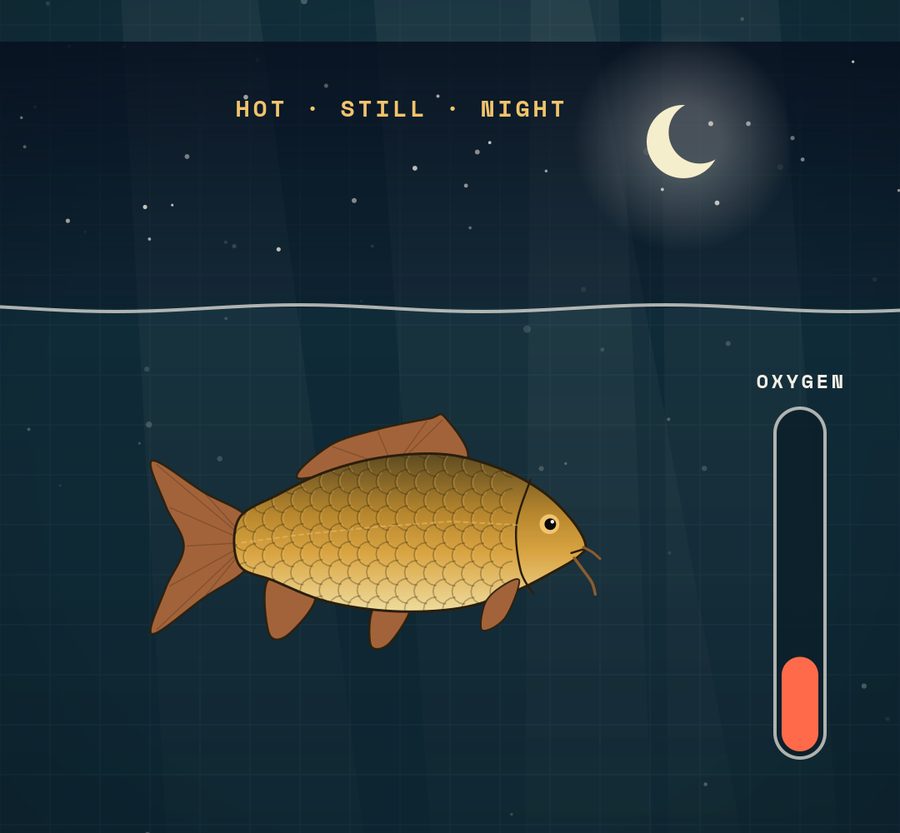
On a hot summer night, a lake can start running out of oxygen. Two things stack up: warm water holds less of it, and after dark the plants stop making it and start using it.
Warm water holds less oxygen
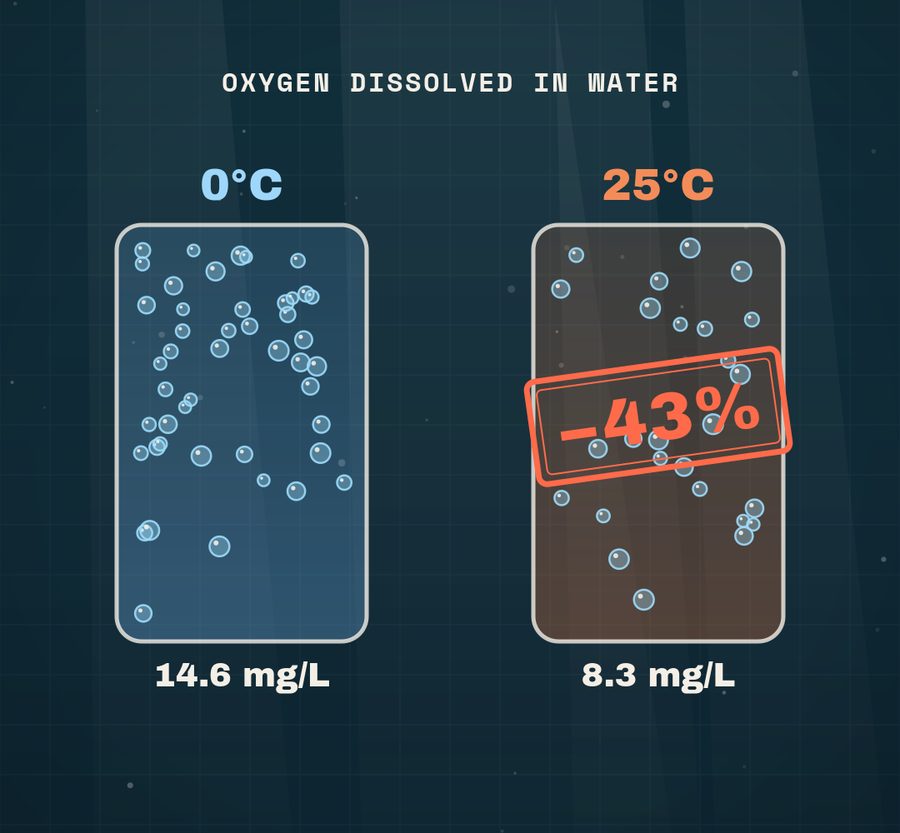
How much oxygen water can hold depends on temperature. Fully saturated fresh water holds about 14.6 mg/L near freezing but only about 8.3 mg/L at 25 °C. That's roughly 40% less, before anything in the lake has used any.
The plants' night shift
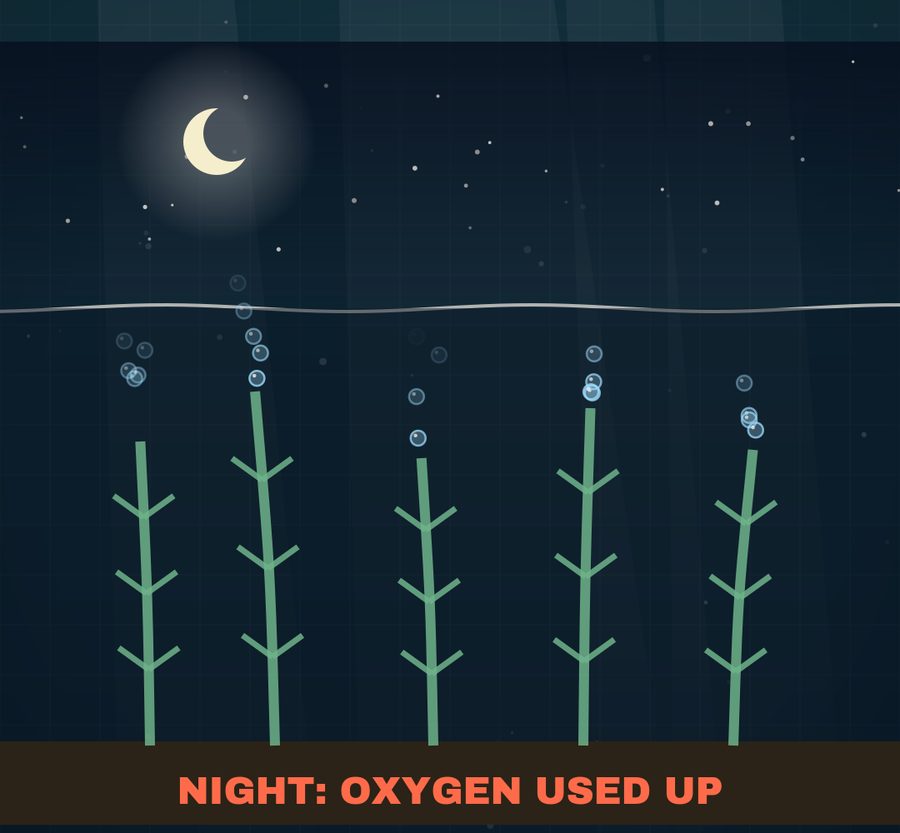
In daylight, weed and algae photosynthesise and pump oxygen into the water. At night photosynthesis stops, but respiration doesn't, so they switch from making oxygen to using it, alongside every fish and microbe in the lake. The weedier and greener the lake, the bigger the swing.
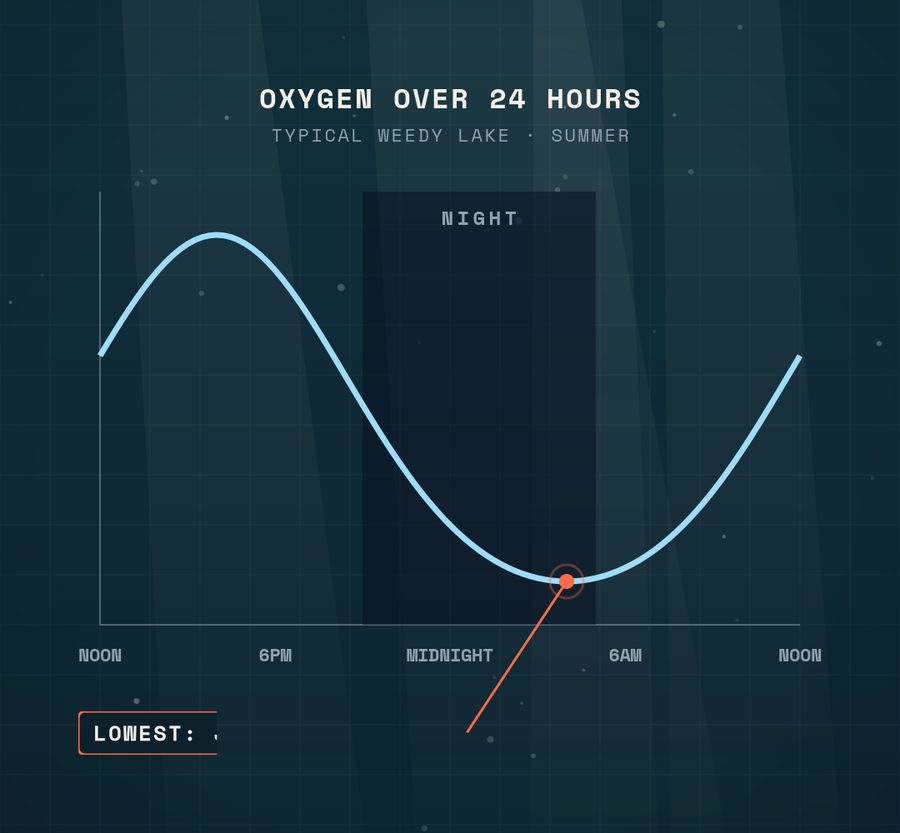
The lowest point: just before dawn
Put those together and oxygen falls all night, hitting its lowest just before sunrise, when the plants start up again. The curve in the animation shows the typical shape in a productive lake, not data from one particular water.
Carp at the surface
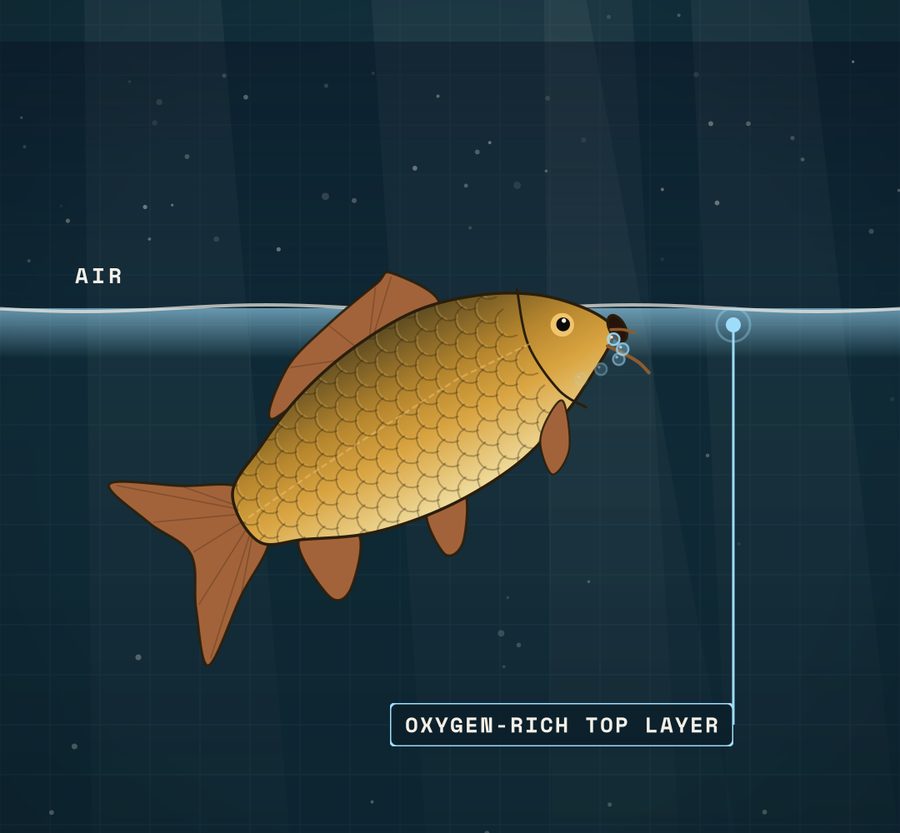
When oxygen is low, fish use a trick called aquatic surface respiration. Oxygen soaks into the water from the air, so the thin top layer is the richest. You might see carp at the surface at first light, sipping that layer.
In extreme cases, oxygen can fall low enough to kill fish, which is why summer fish kills tend to happen around dawn. That's a story for another guide.
Find the stirred water
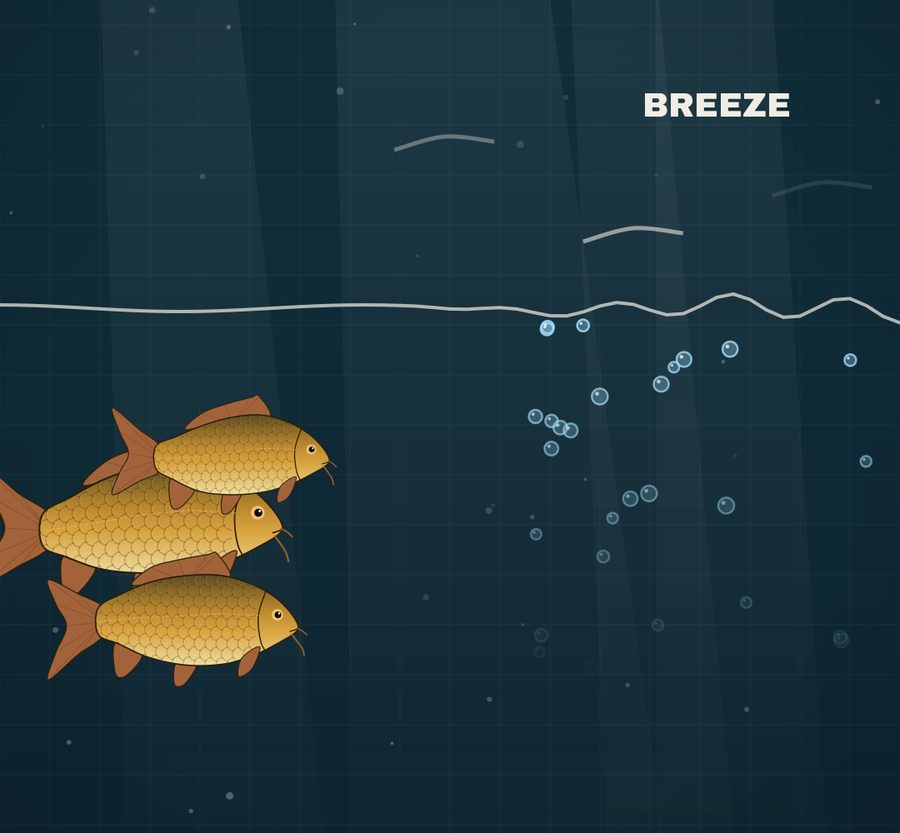
Wind and inflows mix oxygen-rich surface water down. After a hot, still night, the end of the lake getting a breeze, or water near an inlet, is often where the fish are most comfortable.
Where this comes from
Saturated fresh water holds ~14.6 mg/L oxygen at 0°C and ~8.3 mg/L at 25°C (sea level), so ~43% less
USGS dissolved-oxygen solubility tables (Benson & Krause 1984)
Plants and algae release oxygen by photosynthesis in daylight and consume it by respiration at night
Basic plant biology; limnology, e.g. Wetzel, Limnology (2001)
Dissolved oxygen typically bottoms out around dawn in productive (weedy, algae-rich) waters
Wetzel (2001); routine diel oxygen monitoring
Fish gulp at the surface in low oxygen, using the oxygen-rich surface film ("aquatic surface respiration")
Kramer & McClure (1982), Aquatic surface respiration, a widespread adaptation to hypoxia in tropical freshwater fishes, Env. Biol. Fishes 7: 47–55
Oxygen enters the surface from the air, and wind and inflows mix it down
Physics of gas exchange and mixing
"Look for carp where the water's being stirred"
Follows from the above, and common angler advice after hot, still nights